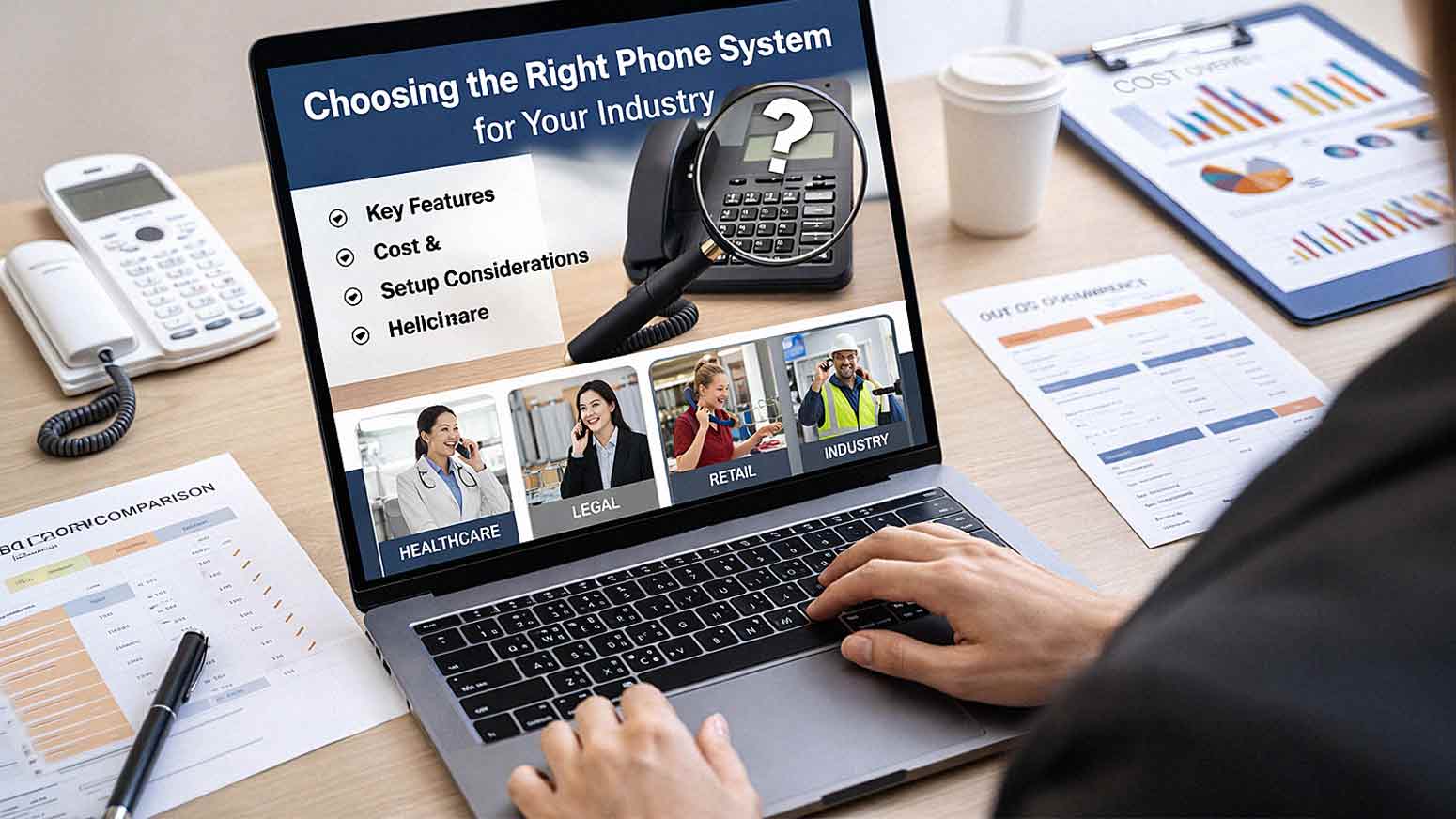
Not every business uses a phone system the same way.
A medical office handles patient calls and appointment scheduling. A law firm manages confidential client conversations. A retail business may prioritize quick customer inquiries and order support.
Choosing a phone system without considering your industry often leads to missing features, poor call handling, or unnecessary costs.
The right system supports how your business communicates every day.
What All Business Phone Systems Should Provide
Before looking at industry-specific needs, every business phone system should include core functionality.
These basics include:
• Reliable Call Quality
• Call Routing And Auto Attendants
• Voicemail And Messaging
• Mobile And Remote Access
• Call Reporting And Analytics
These features form the foundation of any business communication system.
From there, industry requirements shape additional needs.
Healthcare: Secure and Reliable Communication
Key Requirements
Healthcare organizations require strong communication systems that protect patient information and support scheduling.
Important needs include:
• Secure Call Handling
• Appointment Scheduling Integration
• High Call Reliability
• Call Logging For Documentation
Recommended Features
Healthcare phone systems often include:
• Encrypted VoIP Communication
• Call Recording With Compliance Controls
• Voicemail To Email For Quick Response
• Multi-Location Call Routing
Healthcare environments require both security and reliability.

Legal: Confidentiality and Call Documentation
Key Requirements
Law firms handle sensitive client conversations.
Key priorities include:
• Confidential Communication
• Call Tracking
• Reliable Message Delivery
• Remote Access For Attorneys
Recommended Features
Legal phone systems often include:
• Call Recording With Access Controls
• Secure Voicemail Systems
• Mobile Access For Remote Work
• Detailed Call Logs
Clear documentation helps support case management and client communication.
Retail: Speed and Customer Interaction
Key Requirements
Retail businesses rely on fast and efficient communication.
Important needs include:
• Quick Call Answering
• High Call Volume Handling
• Customer Inquiry Management
• Order And Inventory Support
Recommended Features
Retail phone systems often include:
• Auto Attendants For Call Routing
• Call Queues For High Volume Periods
• Mobile Integration For Store Managers
• Simple User Interfaces
Speed and accessibility are critical in retail environments.
Professional Services: Flexibility and Mobility
Key Requirements
Professional service firms often operate across multiple locations or remote environments.
Key needs include:
• Remote Work Support
• Mobile Communication
• Client Accessibility
• Flexible Call Routing
H3: Recommended Features
These businesses benefit from:
• Cloud-Based VoIP Systems
• Mobile Apps For Calls
• Call Forwarding And Routing Rules
• Integration With CRM Systems
Flexibility allows teams to stay connected from anywhere.
Manufacturing and Logistics: Reliability and Coordination
Key Requirements
Operational environments depend on coordination between teams.
Important factors include:
• Reliable Internal Communication
• Coordination Across Departments
• Support For Multiple Locations
• Minimal Downtime
Recommended Features
Manufacturing phone systems often include:
• Paging And Intercom Features
• Multi-Site Call Routing
• Durable Desk Phones
• Redundant Communication Options
Communication delays can affect production schedules.
Education: High Volume and Accessibility
Key Requirements
Schools and educational institutions manage large call volumes.
Key priorities include:
• Handling Parent And Student Calls
• Department-Based Routing
• Emergency Communication
• Budget Constraints
Recommended Features
Education phone systems often include:
• Automated Call Routing By Department
• Broadcast Messaging Features
• Voicemail Management
• Scalable User Licensing
Efficient routing helps manage high call demand.
Key Features to Evaluate Across All Industries
Regardless of industry, certain features should be evaluated carefully.
These include:
• Call Quality And Reliability
• Scalability For Growth
• Integration With Business Tools
• Security And Data Protection
• Reporting And Analytics
Choosing the right features ensures your system supports both current and future needs.
Cloud vs On Premise Phone Systems
Businesses must also choose between cloud-based and on premise systems.
Cloud systems offer:
• Remote Access
• Easier Scalability
• Lower Upfront Cost
• Automatic Updates
On-premises systems provide:
• Greater Control
• Internal Infrastructure Management
• Limited Dependence On Internet Connectivity
Most modern businesses prefer cloud-based VoIP systems due to flexibility.
Cost Considerations by Industry
Phone system costs vary depending on complexity.
Factors that influence cost include:
• Number Of Users
• Required Features
• Call Volume
• Integration Needs
• Security Requirements
Some industries, such as healthcare and finance, may require additional security features that increase cost.
Understanding these factors helps build an accurate budget.
Common Mistakes When Choosing a Phone System
Businesses often make avoidable mistakes.
Common issues include:
• Choosing Based Only On Price
• Ignoring Industry Requirements
• Overlooking Scalability
• Selecting Too Many Or Too Few Features
• Not Testing Call Quality
These mistakes often lead to poor user experience and higher long-term costs.
How to Match Your Phone System to Your Workflow
Your phone system should reflect how your business operates.
Ask questions such as:
• How Do Customers Contact You
• How Are Calls Routed Internally
• Do Employees Work Remotely
• What Systems Need Integration
Answering these questions helps align your phone system with your workflow.
How Managed VoIP Providers Help Businesses Choose
Selecting the right system can be complex.
Managed VoIP providers evaluate:
• Business Requirements
• Industry Needs
• Network Infrastructure
• Growth Plans
AIS supports businesses across Las Vegas and Southern California with VoIP solutions tailored to industry-specific communication needs.
Proper planning improves performance and user experience.

What the Right Phone System Should Feel Like
When your phone system is properly aligned:
• Calls Are Routed Efficiently
• Employees Communicate Easily
• Customers Reach The Right Person Quickly
• System Performance Is Reliable
Communication should feel smooth and consistent.
Next Steps: Evaluate Your Current Phone System
If your current system is not meeting your needs, AIS offers a Business Phone System Assessment. This review evaluates your communication workflows, current features, call quality, and industry requirements to recommend the best solution.
Choosing the right phone system improves both internal efficiency and customer experience.
Topics:
