

Cyber Insurance 101: Why Your General Liability Policy Won't Save You
January 6th, 2026 | 11 min. read
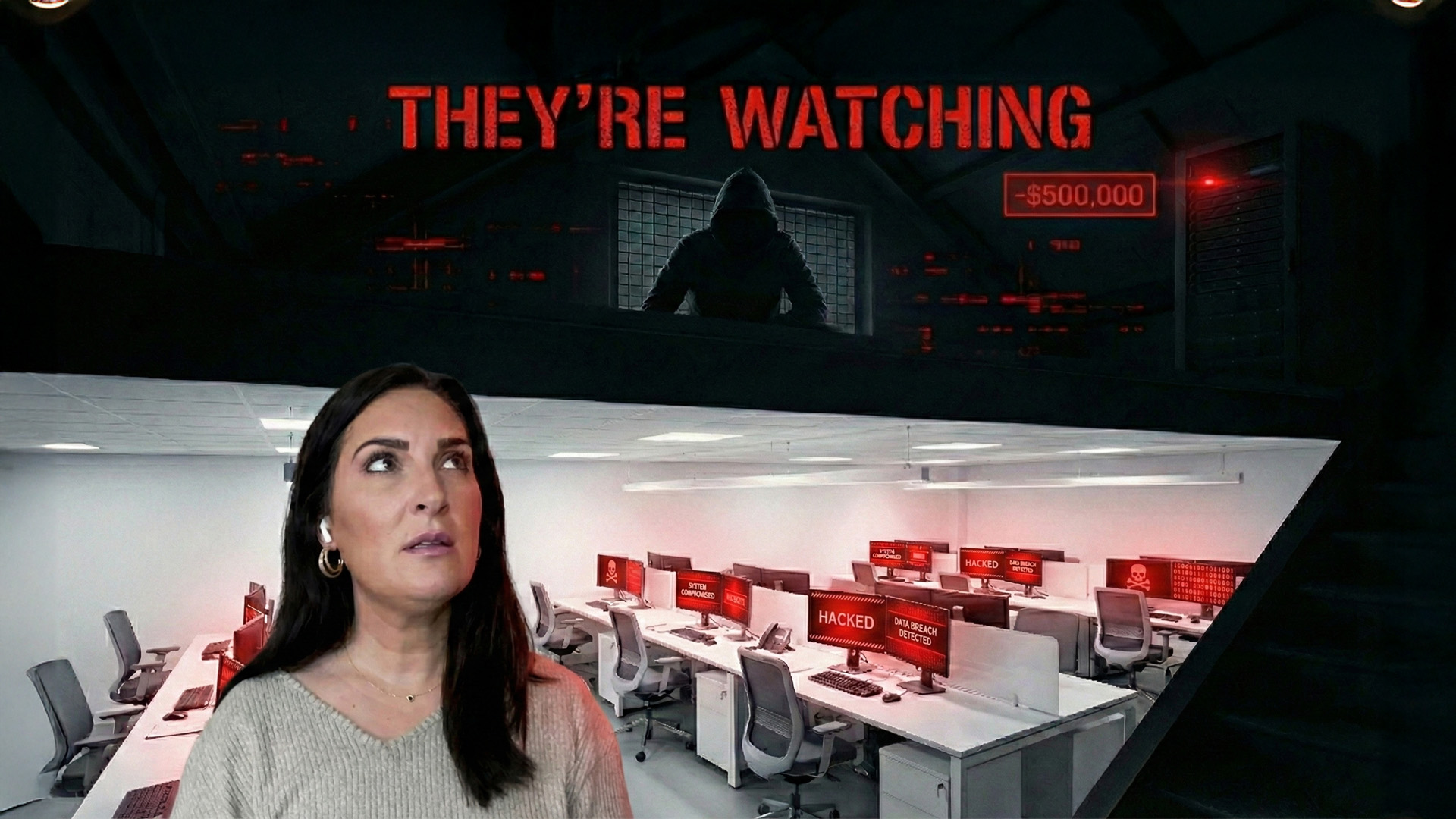
You have business insurance. You have a general liability policy. You might even have a commercial property policy covering your equipment. So when a hacker breaks into your network, steals your client data, and locks up your files with ransomware — you're covered, right?
Almost certainly not.
This is one of the most expensive misconceptions in the small business world right now. And it's costing SMB owners real money, real clients, and in some cases, their entire businesses.
In Episode 2 of *Tech Made Human*, AIS host Marissa Poston sat down with Dave Clark, VP of Strategic Accounts at AIS, to cut through the confusion around cyber liability insurance. What does it actually cover? What does your current policy leave out? And what steps should you take *before* you ever need to file a claim?
This article expands on that conversation with updated 2026 data, actionable guidance, and honest answers to the questions most insurance agents and IT providers aren't telling you upfront.
The Gap Most Small Business Owners Don't See Coming
Let's start with a number that should stop you in your tracks.
SMBs were targeted in 43% of all recent data breaches, accounting for nearly $7 billion in reported losses. Yet nearly half of small businesses in the U.S. report having no cyber insurance at all, according to a 2026 Forbes analysis.
Read that again. Almost half. Zero coverage.
And of the businesses that *do* carry some form of insurance, many are assuming their general liability policy fills the gap. It doesn't. General liability was designed for physical-world risks — a customer slipping in your lobby, property damage, bodily injury claims. It was never built to handle the financial fallout from a data breach, ransomware attack, or social engineering scam.
The cyber threat environment has evolved rapidly. The policies most small businesses carry have not kept pace.
What General Liability Insurance Actually Covers (And What It Doesn't)
General liability insurance is essential. You absolutely need it. But it has a defined scope, and digital threats fall almost entirely outside of it.
General liability typically covers:
- Third-party bodily injury
- Third-party property damage
- Personal and advertising injury (libel, slander)
- Legal defense costs for covered claims
General liability typically does NOT cover:
- Data breaches and theft of client information
- Ransomware payments or extortion demands
- Business interruption losses caused by a cyberattack
- Costs to notify affected customers after a breach
- Regulatory fines and penalties under state or federal privacy laws
- Forensic investigation costs to determine what was compromised
- Reputation management or public relations expenses after an incident
- Recovery of corrupted or encrypted data
That list is not theoretical. Those are real costs that real small businesses have faced — and paid out of pocket — because they assumed their existing policy would handle it.
What Cyber Liability Insurance Actually Covers
A dedicated cyber liability policy is designed specifically for the digital risks your business faces every day. Policies vary by carrier and premium level, but a solid cyber insurance policy should include coverage in two broad categories: first-party and third-party coverage.
First-Party Coverage (Protects Your Business Directly)
- Business interruption: Compensates for lost revenue while your systems are down after an attack
- Data restoration: Covers the cost of recovering or rebuilding lost or corrupted data
- Ransomware and extortion: Covers payments to cybercriminals (though this is nuanced — more on that below)
- Crisis management: Funds public relations efforts to protect your reputation after a breach
- Forensic investigation: Pays for IT experts to determine how the breach happened and what was taken
- Notification costs: Covers the legal requirement to notify affected customers, employees, or partners
Third-Party Coverage (Protects You From Lawsuits)
- Network security liability: Covers claims from clients whose data was compromised through your systems
- Privacy liability: Protects against lawsuits related to violations of privacy laws
- Regulatory defense: Helps cover legal costs if a government agency investigates or fines you
- Media liability: Covers claims related to content you publish online
One important note: not all policies include ransomware coverage, and those that do may require you to meet specific security requirements — like multi-factor authentication, endpoint detection tools, and regular data backups — before they'll pay out. This is where working with an IT partner matters enormously.
The 12-to-18-Month Problem
Here's something that changes how most people think about cyber threats: hackers often sit inside a compromised network for 12 to 18 months before they do anything visible.
They're not always there to immediately steal your data or launch ransomware. Sometimes they're watching. Collecting credentials. Mapping your systems. Learning your business processes. When they finally strike, they already know exactly where to go and what to take.
This has a direct implication for your insurance coverage. If a breach began 14 months ago but you only discovered it today, when does your policy kick in? What's your retroactive coverage date? These are questions worth asking your broker — and knowing the answers *before* you need them.
It also reinforces why reactive security alone isn't enough. By the time you see the attack, the attacker may have been in your network for over a year.
Who Needs Cyber Insurance? (Hint: Probably You)
Some business owners still believe they're too small to be a target. Cybercriminals think differently.
Small businesses are attractive precisely *because* they tend to have weaker security, less IT oversight, and fewer resources to respond to an attack. You're not off the radar — you're on it.
You should strongly consider cyber liability insurance if your business:
- Stores any customer data (names, emails, payment information, health information)
- Relies on email communication with clients or vendors
- Uses cloud-based software or stores files online
- Processes credit or debit card transactions
- Has employees who access company systems remotely
- Is subject to industry regulations (HIPAA, PCI DSS, CCPA, etc.)
In 2026, that describes nearly every business with more than two employees.
What Insurers Are Looking For Before They Approve Your Policy
Cyber insurance isn't as simple as filling out a form and paying a premium. Carriers are increasingly requiring businesses to demonstrate a baseline level of security hygiene before coverage is approved — and in some cases, before they'll pay a claim.
Common requirements include:
- Multi-factor authentication (MFA) on email, remote access, and financial accounts
- Endpoint Detection and Response (EDR) tools on all company devices
- Regular, tested data backups stored offline or in a secure cloud environment
- Employee security awareness training — at least annually
- A documented incident response plan
- Email filtering and anti-phishing protection
If you can't confirm these controls are in place, your application may be denied — or your premium may be significantly higher. And if you claim to have these controls but don't, a carrier can deny your claim after a breach.
This is where many SMBs hit a wall. They want the insurance, but they don't have the internal IT infrastructure to qualify. A managed IT services provider can help you close that gap.
How Managed IT Services and Cyber Insurance Work Together
Think of managed IT services as the foundation that makes your cyber insurance policy actually work — and keeps you from needing to file a claim in the first place.
A qualified managed IT provider handles the security controls that insurers require: MFA deployment, endpoint protection, security monitoring, patch management, backup verification, and employee training. When your systems meet or exceed those standards, you're in a much stronger position to qualify for coverage, keep your premiums reasonable, and have valid claims honored.
At AIS, we work with SMBs across Las Vegas, Southern California, and surrounding regions to build the IT foundations that put businesses in control of their security posture. Our managed IT services clients benefit from 24/7 monitoring and support, dedicated account managers, and a team that understands the specific regulatory and compliance environments that affect your industry.
We're not an insurance company. But we help make sure that when you walk into that insurance conversation, you're not starting from zero.
Schedule a Free Consultation with our team →
What to Ask Your Insurance Broker Right Now
If you already have a cyber policy — or you're shopping for one — here are the questions you should be asking:
1. Does my current general liability policy include any cyber coverage at all? (Most don't, but some have endorsements worth reviewing.)
2. What specific events trigger coverage under a cyber policy?
3. Does the policy cover ransomware payments? Under what conditions?
4. What security controls do I need to have in place to qualify — and to have claims honored?
5. What is my retroactive date, and how does that affect coverage for breaches discovered late?
6. Does the policy cover regulatory fines and penalties?
7. How is "business interruption" defined, and how long will the carrier cover losses?
8. What's the claims process, and how quickly can I expect a response after an incident?
Don't let your broker answer these questions vaguely. Get it in writing. And if they can't answer them clearly, that's useful information too.
The Real Cost of Being Underinsured
Let's be direct about what's at stake.
The average cost of a data breach for a small business in 2026 is well into six figures when you account for forensic investigation, legal notification requirements, regulatory fines, lost business, and remediation costs. Many SMBs that experience a significant breach don't recover — not because the breach itself was unsurvivable, but because the financial fallout was.
The cost of a cyber insurance policy for a small business typically ranges from a few hundred to a few thousand dollars per year, depending on your revenue, industry, and security posture. That is not a large number compared to what a single incident can cost.
The question isn't really whether you can afford cyber insurance. It's whether you can afford to go without it.
FAQ: Cyber Insurance for Small Businesses
Does my general liability insurance cover cyberattacks?
In almost all cases, no. General liability policies cover physical-world risks like bodily injury and property damage. Cyberattacks, data breaches, and ransomware events require a separate cyber liability policy. Some policies include limited cyber endorsements, so it's worth reviewing your current policy carefully — but don't assume you're covered without confirming it.
How much does cyber insurance cost for a small business?
Premiums vary widely based on your industry, annual revenue, number of employees, and existing security controls. For a small business with solid security hygiene, annual premiums often range from $500 to $3,500. Businesses in higher-risk industries (healthcare, finance, legal) or those with weaker security controls may pay significantly more — or face coverage denials.
What happens if I don't have the security controls my insurer requires?
Your claim can be denied, even if you're paying premiums. If you indicated during the application that you had controls like MFA or backups in place and you didn't, the carrier may treat it as misrepresentation. This is why it's important to actually implement the controls you report — and to work with an IT provider who can verify and document them.
Is ransomware covered by cyber insurance?
Some policies cover ransomware payments and extortion-related costs. Many have specific conditions attached, including requirements that you had active endpoint protection, backups, and documented security controls at the time of the incident. Always read the ransomware provisions of your policy carefully before assuming you're covered.
Can a managed IT services provider help me qualify for better cyber insurance rates?
Yes. Carriers look favorably on businesses that can demonstrate a proactive security posture — things like 24/7 monitoring, regular patching, MFA enforcement, and employee security training. A managed IT provider implements and documents these controls, which can help you qualify for coverage and potentially lower your premiums.
What is a retroactive date, and why does it matter?
Your retroactive date is the earliest point in time that your cyber insurance policy will cover a breach — even if that breach is discovered later. Since hackers often infiltrate systems months before detection, a policy with a longer retroactive window provides stronger protection. This is an often-overlooked detail worth negotiating with your broker.
My business is small. Am I really a target?
Yes. Small businesses represent 43% of all data breach targets, according to recent data. Cybercriminals often prefer smaller targets precisely because they tend to have weaker defenses, less IT oversight, and slower incident detection. Being small is not a security strategy.
Ready to Build the IT Foundation Your Cyber Insurance Requires?
Cyber insurance is an important layer of protection. But it works best when your business already has solid security controls in place — the kind that keep incidents from happening in the first place, and that keep your claims valid when something does go wrong.
At AIS, we help SMBs across Las Vegas, Southern California, and surrounding regions build and maintain the IT infrastructure that modern businesses need. Our team holds a 96% NPS score and is rated #1 in North America for client satisfaction among office technology providers. Our clients stay with us an average of 7+ years — because we treat every business relationship like a long-term partnership, not a transaction.
Whether you need managed IT support, help implementing security controls, cloud-based phone systems, document solutions, or physical security through Verkada, we bring everything under one roof.
A true southerner from Atlanta, Georgia, Marissa has always had a strong passion for writing and storytelling. She moved out west in 2018 where she became an expert on all things business technology-related as the Content Producer at AIS. Coupled with her knowledge of SEO best practices, she's been integral in catapulting AIS to the digital forefront of the industry. In her free time, she enjoys sipping wine and hanging out with her rescue-dog, WIllow. Basically, she loves wine and dogs, but not whiny dogs.
