Security cameras are no longer optional for most businesses. They protect property, support liability claims, and improve overall visibility.
But when comparing systems, many businesses face a common question. Should you choose CCTV or IP cameras?
At a glance, both record video. In practice, they operate very differently.
Understanding these differences helps you choose a system that fits your security needs, budget, and long-term plans.
What Is a CCTV Camera System?
CCTV stands for closed-circuit television.
These systems use analog cameras connected to a recording device through physical cables.
Key characteristics include:
• Analog Video Transmission
• Direct Connection To DVR Systems
• Dedicated Cabling For Each Camera
• Localized Video Storage
CCTV systems have been used for decades and remain common in many businesses.
They are known for simplicity and lower upfront cost.

What Is an IP Camera System?
IP cameras use digital technology.
Instead of transmitting analog signals, they send video data over a network.
Key characteristics include:
• Digital Video Transmission
• Network-Based Connectivity
• Connection Through Ethernet Or WiFi
• Integration With Cloud Or Network Storage
IP camera systems are often part of modern business security systems.
They offer more flexibility and advanced features compared to traditional CCTV.
Key Differences Between CCTV and IP Cameras
Understanding the core differences helps simplify your decision.
The main distinctions include:
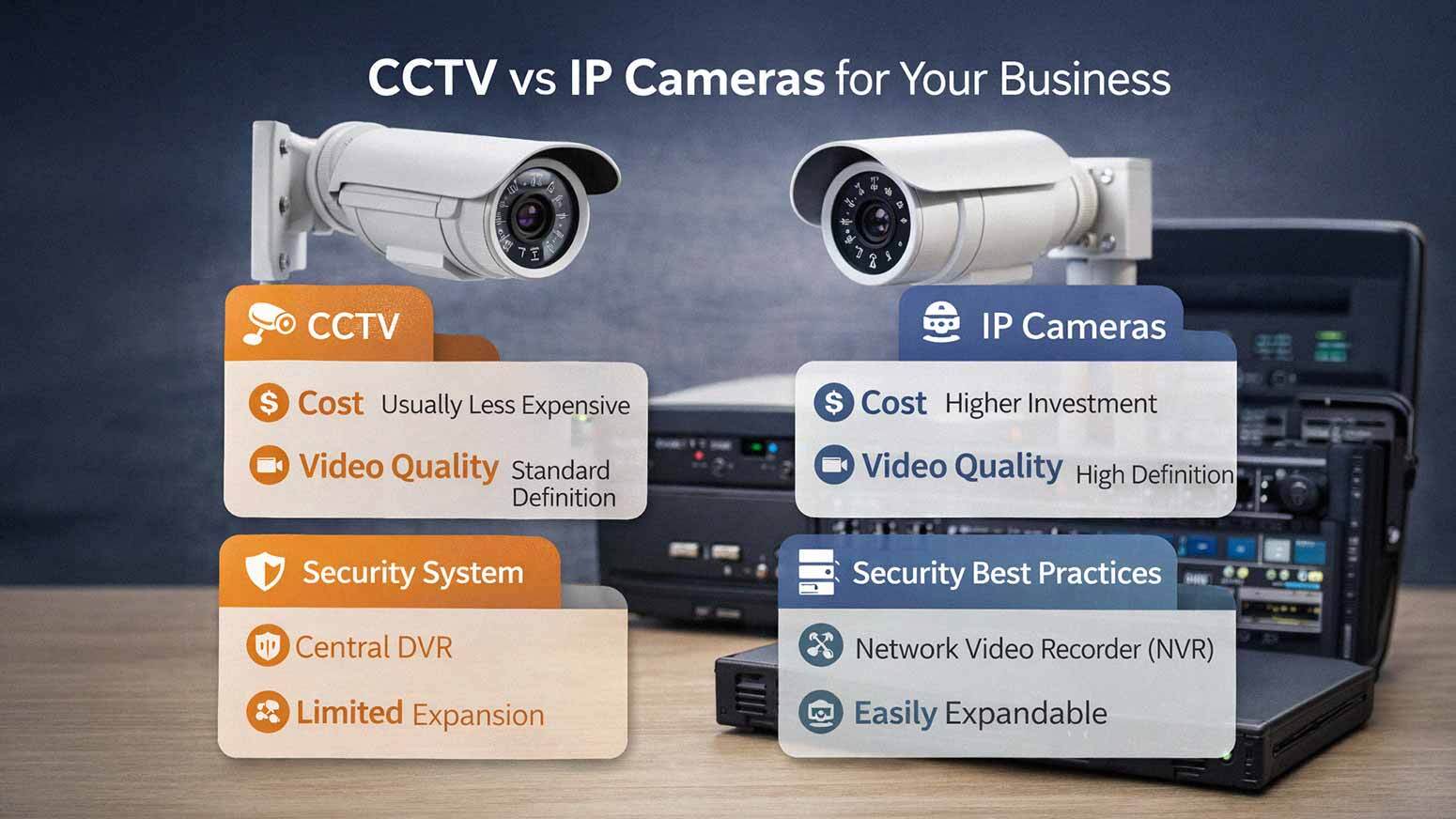
• CCTV Uses Analog Signals While IP Cameras Use Digital Data
• CCTV Requires Separate Cabling While IP Cameras Use Network Infrastructure
• CCTV Stores Video Locally, While IP Cameras Support Cloud And Network Storage
• IP Cameras Offer Higher Resolution And Advanced Features
These differences affect performance, scalability, and cost.
Video Quality: Analog vs Digital
One of the most noticeable differences is video quality.
CCTV systems typically provide:
• Lower Resolution Footage
• Limited Detail In Zoomed Images
• Basic Recording Capabilities
IP cameras offer:
• High Definition Video
• Better Image Clarity
• Improved Zoom And Detail
• Advanced Image Processing
Higher quality footage improves identification and investigation.
Installation and Cabling Requirements
Installation varies significantly between systems.
CCTV systems require:
• Dedicated Coaxial Cabling For Each Camera
• Separate Power Connections
• Direct Wiring To DVR Units
IP systems use:
• Ethernet Cables For Both Data And Power
• Network Switches And Routers
• Centralized Network Infrastructure
IP cameras often simplify installation, especially in modern office environments with existing network infrastructure.
Scalability and Expansion
Scalability is a major factor for growing businesses.
CCTV systems are more limited.
Adding cameras may require:
• Additional Cabling
• Expanded DVR Capacity
• Hardware Upgrades
IP systems are more flexible.
They allow:
• Easy Addition Of New Cameras
• Integration With Existing Networks
• Expansion Across Multiple Locations
Businesses planning for growth often prefer IP camera systems.
Remote Access and Monitoring
Modern businesses expect remote access.
CCTV systems may offer limited remote viewing depending on setup.
IP camera systems provide:
• Remote Access Through Mobile Devices
• Live Video Streaming
• Cloud-Based Monitoring
• Real Time Alerts
Remote access improves visibility and response time.
Storage Options and Flexibility
Storage is another key difference.
CCTV systems typically rely on:
• DVR-Based Local Storage
• Fixed Storage Capacity
IP systems offer more flexibility.
They may include:
• Network Video Recorders
• Cloud Storage Options
• Hybrid Storage Models
Flexible storage allows businesses to adjust retention based on needs.
Security and Data Protection
Security is an important consideration.
CCTV systems are generally isolated, which reduces exposure but limits functionality.
IP systems connect to networks, which introduces cybersecurity considerations.
Security measures for IP systems should include:
• Strong Authentication Controls
• Encrypted Data Transmission
• Network Segmentation
• Regular Firmware Updates
Proper configuration protects IP camera systems.
Cost Comparison: CCTV vs IP Cameras
Cost is often a deciding factor.
CCTV systems typically offer:
• Lower Initial Hardware Cost
• Simpler Installation In Some Environments
IP camera systems may involve:
• Higher Initial Investment
• Network Infrastructure Requirements
• Licensing Or Cloud Storage Costs
However, IP systems often provide better long-term value due to flexibility and features.
Maintenance and System Management
Maintenance requirements differ between systems.
CCTV systems may require:
• Manual Troubleshooting
• Physical Access For Adjustments
• Limited Monitoring Tools
IP systems often include:
• Remote Management
• System Monitoring
• Automated Alerts
Advanced management improves system reliability.
Which System Is Right for Your Business?
When CCTV May Be a Better Fit
CCTV systems may work well when:
• Budget Is Limited
• Security Needs Are Basic
• Infrastructure Is Simple
• No Need For Remote Access
These systems provide basic surveillance at a lower cost.
When IP Cameras Make More Sense
IP camera systems are often the better choice when:
• High Quality Video Is Required
• Remote Access Is Important
• Business Is Growing
• Integration With Other Systems Is Needed
Modern businesses often benefit from the flexibility of IP systems.
Common Mistakes When Choosing a Camera System
Businesses often make avoidable mistakes.
Common issues include:
• Choosing Based Only On Price
• Ignoring Future Expansion Needs
• Overlooking Network Requirements
• Not Planning For Storage
• Skipping Security Configuration
Proper planning prevents costly upgrades later.
How Integrated Security Systems Improve Results
Many businesses combine cameras with other security systems.
Integration may include:
• Access Control Systems
• Alarm Monitoring
• Centralized Security Platforms
Integrated systems improve visibility and simplify management.
AIS supports businesses across Las Vegas and Southern California with security solutions that align camera systems with broader infrastructure.
What the Right Camera System Should Feel Like
When your system is properly designed:
• Video Footage Is Clear And Reliable
• Coverage Areas Are Complete
• Remote Access Works Consistently
• Storage Meets Your Needs
Your security system should provide confidence, not uncertainty.
Next Steps: Evaluate Your Current Surveillance System
If you are unsure whether CCTV or IP cameras are right for your business, AIS offers a Security Camera System Assessment. This evaluation reviews your current setup, coverage areas, network infrastructure, and future needs to recommend the best solution.
Choosing the right system improves security and long-term value.
Topics:
