
VoIP phone systems are often sold as a cost-saving alternative to traditional phone service. Many businesses switch, expecting predictable monthly pricing and lower long-term expenses. In the first year, that expectation is usually met.
Over time, however, many businesses notice their VoIP bill slowly creeping upward. The increases are rarely dramatic all at once. Instead, they happen quietly through small changes, added features, usage growth, and carrier adjustments.
Understanding what drives VoIP pricing higher over time helps you plan, avoid surprises, and choose a provider that offers transparency instead of confusion.

How VoIP Pricing Is Structured
Most VoIP pricing is built around a per-user or per-line model. Each user includes a base set of calling features and a usage allowance. Additional services, advanced features, and support options increase the monthly cost.
VoIP pricing typically includes:
- Per-user licenses
- Call routing and voicemail
- Domestic calling allowances
- Basic support
What matters most is what is not included and how changes are handled as your business grows.
Factor 1: Adding Users Without Reviewing Your Plan
One of the most common reasons VoIP pricing increases is simple growth. As businesses hire more employees, new users are added to the phone system.
Each new user increases monthly costs. This seems obvious, but many businesses fail to review their plan as they scale. Over time, they accumulate unused licenses for former employees or temporary staff.
Inactive users still cost money if they are not removed. Regular audits of user accounts help control long-term VoIP expenses.
Factor 2: Feature Creep Over Time
VoIP systems offer a wide range of features. Call recording, analytics, call queues, integrations, mobile apps, and advanced reporting often start as optional add-ons.
Over time, businesses add features to solve specific problems. Each feature adds incremental cost. Individually, these increases seem small. Together, they significantly raise the monthly pricing.
Feature creep happens when features are added without reviewing whether older features are still needed. Periodic reviews help eliminate unused tools and control spending.
Factor 3: Increased Call Volume and Usage Charges
Many VoIP plans include domestic calling within certain limits. As businesses grow, call volume often increases.
Higher call volume can trigger:
- Overage charges
- Higher-tier usage plans
- Increased carrier fees
International calling adds even more variability. Rates differ by country and carrier. Without monitoring, international usage can raise costs unexpectedly.
Understanding call patterns and usage reports helps align your plan with actual needs.
Factor 4: Carrier Fees and Regulatory Charges
Even cloud-based VoIP systems rely on telecom carriers. Carrier costs change over time due to regulatory fees, taxes, and network charges.
These fees often appear as line items on invoices and may increase annually. Businesses sometimes overlook them because they are not controlled by the VoIP provider directly.
While these charges are usually small per user, they add up across a growing organization.
Factor 5: Support and Service Level Upgrades
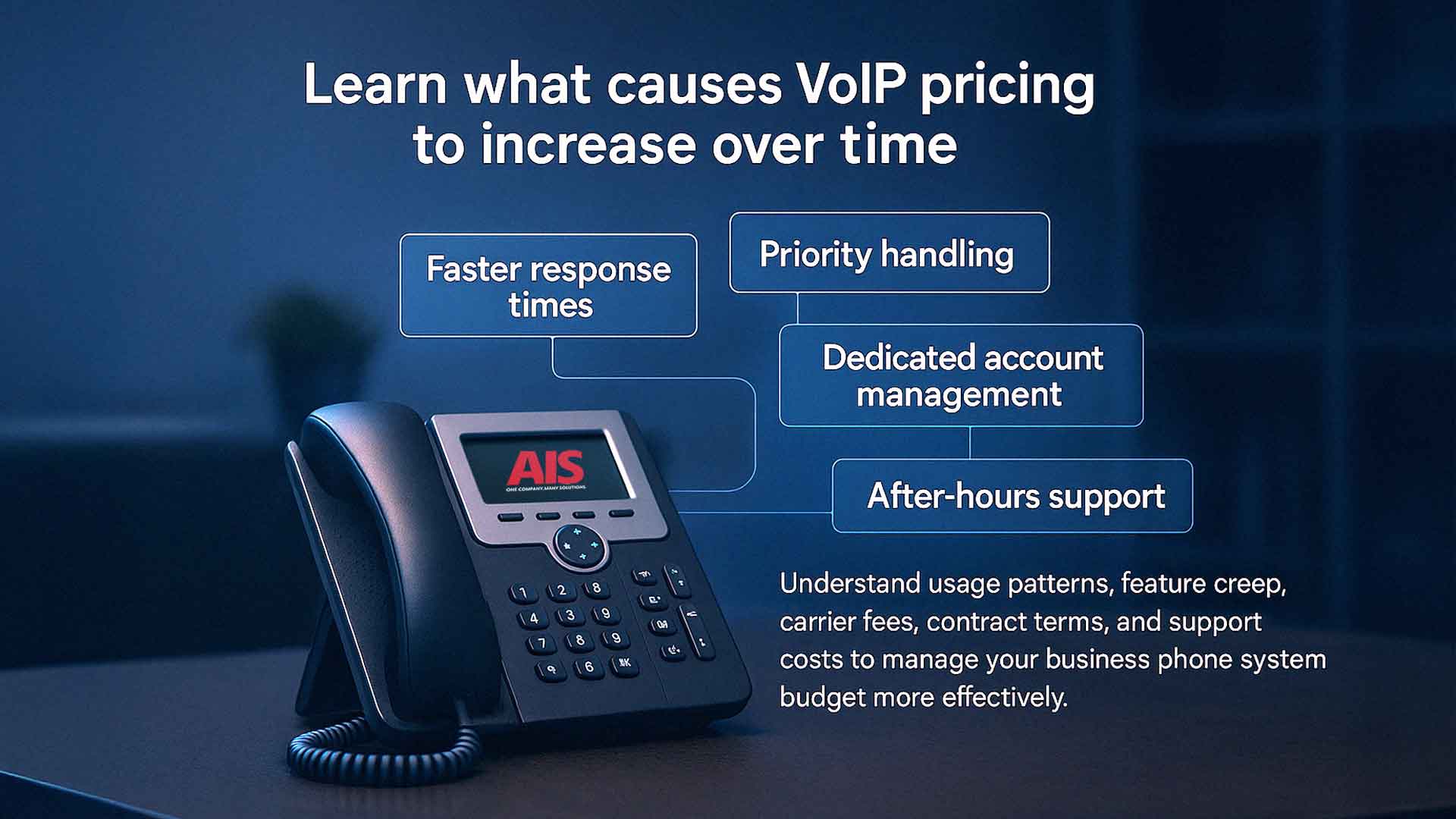
Basic VoIP plans often include standard support. As businesses rely more heavily on their phone system, expectations rise.
Organizations upgrade support for:
- Faster response times
- Priority handling
- Dedicated account management
- After-hours support
These upgrades improve reliability but increase monthly costs. The key is understanding whether premium support aligns with your operational needs.
Factor 6: Hardware and Device Changes
VoIP pricing is not limited to software licenses. Desk phones, conference phones, headsets, and adapters add cost over time.
Hardware-related cost increases include:
- Device replacements
- New models with higher prices
- Warranty extensions
- Device provisioning fees
As teams grow or refresh equipment, these costs surface gradually.
Factor 7: Integration With Other Business Systems
VoIP systems increasingly integrate with CRM platforms, help desk tools, and collaboration software. These integrations improve efficiency but often require additional licenses or setup fees.
Common integrations include:
- CRM call logging
- Help desk ticket creation
- Analytics platforms
- Call recording storage
Each integration adds value but also adds cost. Over time, these integrations become a meaningful portion of the monthly bill.
Factor 8: Contract Renewals and Pricing Adjustments
Many VoIP contracts include annual or multi-year terms. Pricing may be promotional at the start and adjusted at renewal.
Increases often occur when:
- Introductory pricing expires
- Plans are restructured
- New minimums are enforced
- Older plans are retired
Businesses that do not review renewal terms carefully may accept higher pricing automatically.
Factor 9: Poor Call Flow and System Design
Inefficient call routing can increase costs indirectly. Poorly designed call flows lead to longer call times, more transfers, and increased usage.
Examples include:
- Calls are looping between queues
- Excessive voicemail usage
- Redundant auto attendants
Optimizing call flows improves customer experience and reduces unnecessary call volume, which helps control costs.
Factor 10: Working With a Non-Transparent Provider
Provider practices play a major role in long-term pricing. Some providers add fees gradually without proactive communication. Others bundle services in ways that make costs hard to track.
A transparent provider explains pricing changes, reviews usage regularly, and recommends adjustments before costs escalate.
Lack of visibility is one of the biggest contributors to rising VoIP expenses.
How to Keep VoIP Pricing Under Control
Businesses that manage VoIP costs successfully take a proactive approach.
Effective strategies include:
- Regular user audits
- Reviewing feature usage
- Monitoring call volume reports
- Evaluating support levels
- Reviewing renewal terms
- Optimizing call flows
- Partnering with a transparent provider
Small adjustments made consistently prevent long-term cost creep.

How AIS Helps Businesses Manage VoIP Costs
AIS works with businesses across Las Vegas and Southern California to design VoIP systems that scale without unnecessary cost increases.
We review usage patterns, features, call flows, and contracts to ensure pricing aligns with actual needs. Our goal is predictable costs, reliable performance, and clear communication.
What VoIP Pricing Should Look Like Over Time
A well-managed VoIP system grows with your business. Costs increase when users are added or services expand, not because of hidden fees or overlooked usage.
When pricing is transparent, businesses can plan confidently and avoid frustration.
Your Next Steps: Review Your VoIP Billing and Usage
If your VoIP costs have increased without a clear reason, it may be time for a review. AIS offers a VoIP Cost and Usage Assessment that identifies inefficiencies and opportunities to reduce spend without sacrificing performance.
Topics:
