
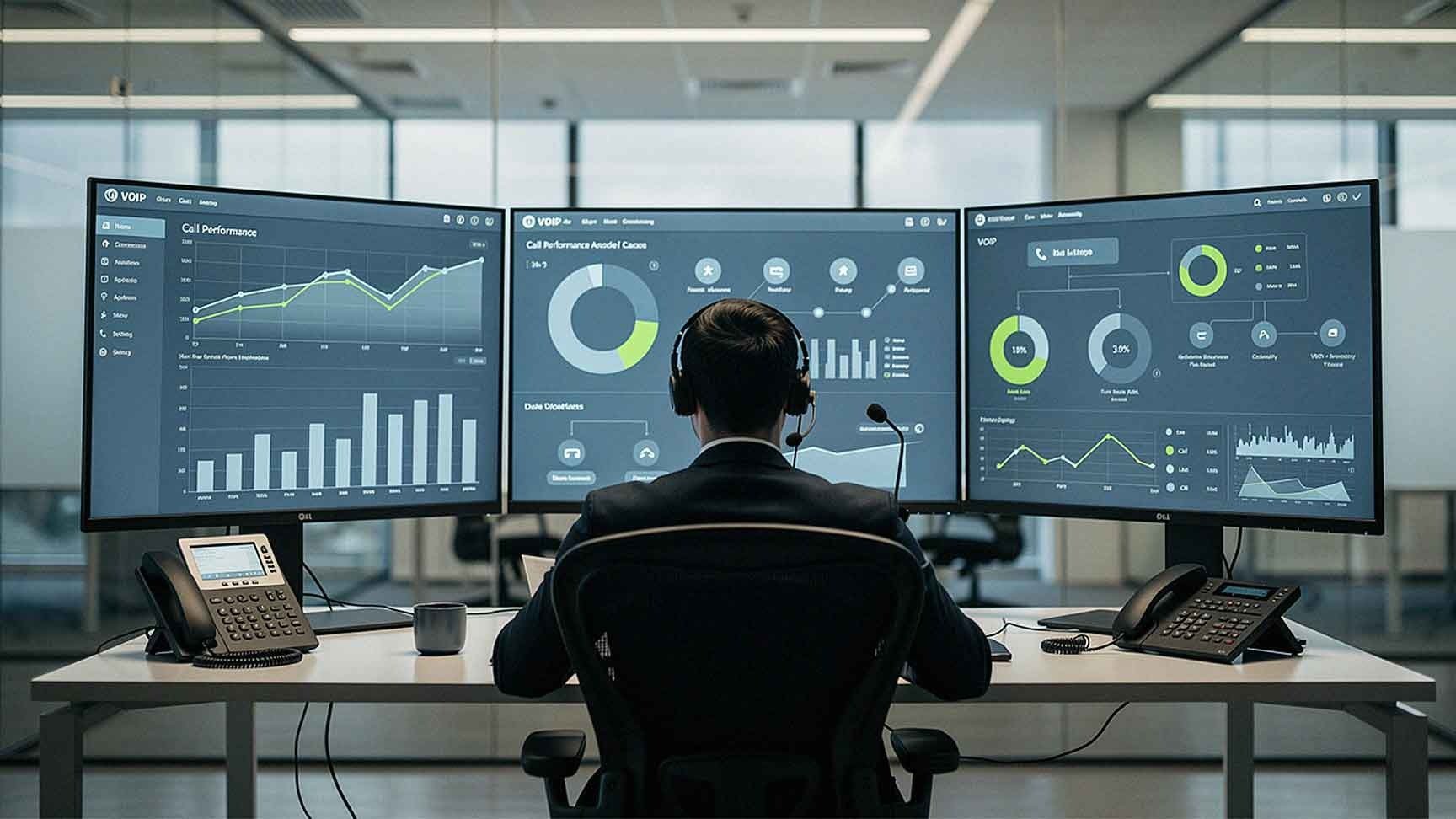
Your phone system generates data every day.
Inbound calls. Outbound calls. Missed calls. Call duration. Hold times. Transfers. Abandoned calls.
Most businesses never look at this data.
They focus on whether calls are working, not how calls are performing. That leaves efficiency, revenue opportunities, and accountability on the table.
Call analytics turns raw phone data into actionable insight. When used properly, call analytics boosts workflows across sales, support, operations, and leadership.

What Are Call Analytics?
Call analytics are reporting tools built into modern VoIP and Cloud PBX systems. They measure and track call-related activity.
Common call analytics metrics include:
• Call volume by time and date
• Missed call rates
• Average answer time
• Call duration
• Hold time
• Transfer frequency
• Call abandonment rate
• User performance metrics
These metrics help businesses understand how communication flows through the organization.
How Call Analytics Boosts Response Time
Identifying Missed Call Patterns
Missed calls are often invisible unless customers complain.
Call analytics reveals:
• Peak missed call hours
• Departments with high missed rates
• Individual users missing calls
• After-hours call trends
With this data, businesses can adjust staffing, routing, or scheduling.
Reducing missed calls improves both customer experience and revenue capture.
Measuring Average Answer Time
Slow response times create frustration.
Tracking average answer time allows leadership to:
• Identify delays
• Reassign call routing
• Adjust auto attendant design
• Improve staffing levels
Improved response time directly enhances workflow efficiency.
Improving Sales Workflows With Call Analytics
Sales teams rely heavily on phone communication.
Call analytics boosts sales workflows by:
• Tracking outbound call volume
• Measuring follow-up frequency
• Identifying high-performing reps
• Monitoring call duration trends
If sales KPIs include call activity targets, analytics provides measurable accountability.
Leadership can compare call data with conversion rates to identify patterns.
For example, shorter response times may correlate with higher close rates.
H2: Enhancing Customer Service Operations
Customer service departments benefit significantly from call analytics.
Key improvements include:
• Monitoring hold times
• Tracking abandoned calls
• Identifying frequent transfer loops
• Measuring call resolution time
If customers frequently hang up before reaching an agent, workflow adjustments are needed.
Analytics highlights bottlenecks so teams can redesign processes.
Optimizing Staffing and Scheduling
One of the strongest workflow benefits of call analytics is workforce alignment.
Call volume often fluctuates by:
• Time of day
• Day of week
• Season
• Marketing campaigns
By reviewing historical call analytics, businesses can:
• Adjust shift schedules
• Reduce overstaffing during slow periods
• Add coverage during peak times
This improves labor efficiency and reduces unnecessary payroll expense.
Reducing Internal Transfer Friction
Frequent call transfers slow workflows and frustrate callers.
Call analytics reveals:
• Which departments transfer calls most often
• How many transfers occur per call
• Where routing breakdowns happen
Excessive transfers may indicate:
• Poor auto attendant design
• Inadequate staff training
• Incorrect call routing logic
Adjusting routing improves workflow clarity and reduces wasted time.
Supporting KPI Tracking With Call Data
Call analytics connects directly to business KPIs.
Relevant performance metrics may include:
• Customer response time
• First-call resolution rate
• Sales call volume
• Conversion timing
• Call abandonment rate
Aligning call analytics with these KPIs turns phone systems into measurable performance tools.
According to the Federal Communications Commission, reliable VoIP systems enable data-driven communication management.
Tracking analytics ensures reliability translates into performance gains.
Improving Remote and Hybrid Team Visibility
In hybrid environments, visibility into call activity becomes even more important.
Call analytics helps managers:
• Monitor remote call activity
• Track responsiveness
• Ensure coverage across time zones
• Identify communication gaps
This visibility supports accountability without micromanagement.
Identifying Training Opportunities
Analytics reveals patterns that may indicate skill gaps.
For example:
• Long average call duration may signal inefficient handling
• High transfer rates may indicate confusion
• Low outbound call volume may highlight productivity issues
Instead of guessing, leadership can use data to guide targeted training.
This improves workflows and employee performance simultaneously.
Supporting Data-Driven Decision Making
Without analytics, phone systems operate as black boxes.
With call analytics, businesses gain:
• Historical trends
• Real-time dashboards
• Performance comparisons
• Department-level visibility
This supports smarter operational decisions.
For example, if marketing campaigns drive increased call volume, analytics can validate ROI and guide staffing adjustments.
Common Mistakes When Using Call Analytics
While call analytics are powerful, misuse reduces effectiveness.
Common mistakes include:
• Tracking data without reviewing it
• Over-monitoring without clear objectives
• Ignoring peak volume trends
• Failing to connect analytics to business KPIs
Analytics should inform decisions, not overwhelm teams.
Focus on metrics that align with operational goals.
How Managed VoIP Services Enhance Call Analytics
Managed VoIP providers often provide deeper analytics support.
This may include:
• Custom reporting
• Automated performance summaries
• KPI alignment guidance
• Network optimization
• Workflow consultation
AIS supports businesses across Las Vegas and Southern California with Cloud PBX solutions that include structured call analytics reporting.
When analytics are reviewed consistently, workflow improvements follow.
What Workflow Improvement Should Feel Like
After leveraging call analytics effectively, businesses typically notice:
• Faster response times
• Fewer missed calls
• Reduced transfer confusion
• Improved sales accountability
• Better staffing balance
Communication becomes more predictable and efficient.

H2: How to Start Using Call Analytics Effectively
Begin with three simple steps:
• Identify one or two core KPIs
• Review call analytics weekly
• Adjust workflows based on measurable data
Start small and expand as visibility improves.
Analytics becomes valuable when paired with action.
Next Steps: Review Your Call Analytics Strategy
If your business is not actively using call analytics to improve workflows, AIS offers a VoIP Performance and Analytics Review. This review evaluates current reporting capabilities, identifies workflow bottlenecks, and aligns phone data with business KPIs.
Better data leads to better decisions.
Topics:
