
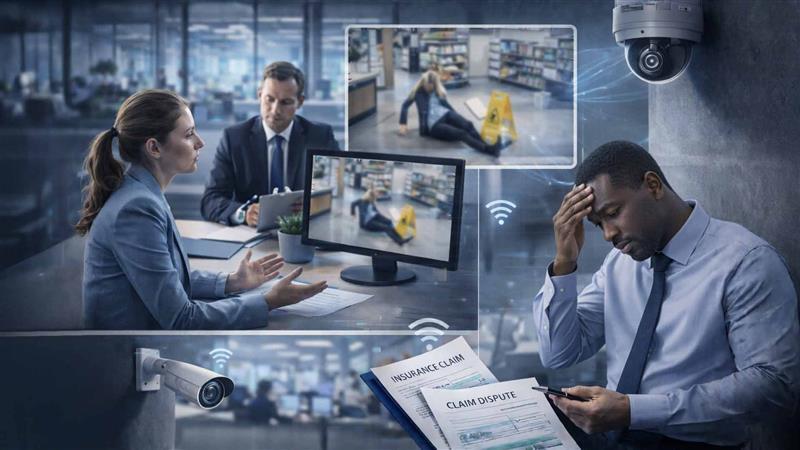
Liability claims are one of the fastest ways for unexpected costs to hit a business. A customer slips. An employee reports an injury. A delivery driver claims unsafe conditions. A theft accusation is disputed.Without clear evidence, these situations turn into arguments.
Insurance companies investigate. Attorneys get involved. Settlements become more likely. Even when a business did nothing wrong, the lack of proof increases financial risk.
Video surveillance changes that equation.
Understanding how video surveillance helps with liability claims allows businesses to see cameras as a risk management tool, not only a security measure.

What Is a Liability Claim in a Business Setting?
A liability claim occurs when someone alleges that your business caused injury, loss, or damage.
Common examples include:
• Slip and fall accidents
• Workplace injury claims
• Property damage disputes
• Customer altercations
• Theft accusations
• Security negligence claims
In most of these cases, facts become disputed quickly. Video evidence can confirm or refute claims objectively.
How Video Surveillance Provides Objective Evidence
Clear Timeline of Events
One of the biggest challenges in liability claims is reconstructing what happened.
Video surveillance provides:
• Exact timestamps
• Visual confirmation of conditions
• Behavior patterns before and after an incident
• Identification of involved parties
This clarity eliminates speculation and reduces reliance on memory or conflicting statements.
Verification of Safety Procedures
Many businesses maintain safety policies. Wet floor signs are placed. Security guards patrol. Access is restricted after hours.
Video footage confirms whether those procedures were followed at the time of an incident.
This verification strengthens the business position during insurance reviews and legal discussions.
How Surveillance Helps in Slip and Fall Claims
Slip and fall claims are among the most common liability issues.
Without footage, businesses must rely on witness accounts. With surveillance footage, businesses can determine:
• Whether a hazard existed
• How long the hazard was present
• Whether warning signs were visible
• Whether the injured party contributed to the incident
In some cases, footage reveals the hazard was created moments before the fall. In others, it confirms that proper signage was in place.
This type of evidence can significantly reduce claim payouts.
How Cameras Protect Against Fraudulent Claims
Not all liability claims are legitimate.
Video surveillance helps identify:
• Staged accidents
• Exaggerated injury claims
• False theft accusations
• Disputes over product handling
Fraudulent claims increase insurance premiums and legal costs. Footage often prevents these claims from escalating.
Insurance carriers value documented evidence because it reduces uncertainty.
How Surveillance Supports Workplace Injury Investigations
Employee injury claims require careful review. Workers’ compensation claims must determine whether the injury occurred during work duties and whether safety policies were followed.
Video footage can show:
• Whether proper equipment was used
• Whether safety procedures were ignored
• Whether the injury occurred on-site
• Whether other contributing factors were present
This information helps employers and insurers reach accurate conclusions.
The Role of Video Surveillance in Security Negligence Claims
Businesses may face claims alleging inadequate security.
Examples include:
• Assaults in parking lots
• Theft in common areas
• Unauthorized access to restricted spaces
If a business has no camera coverage, it becomes difficult to demonstrate that reasonable precautions were taken.
Video surveillance supports:
• Documentation of patrol activity
• Monitoring of access points
• Confirmation of lighting conditions
• Evidence of prompt response
Demonstrating reasonable security measures strengthens defense against negligence allegations.
How Insurance Companies Use Video Evidence
Insurance carriers often request surveillance footage during claim investigations.
Video evidence can:
• Reduce investigation time
• Support faster claim resolution
• Lower payout amounts
• Prevent fraudulent settlements
According to guidance from the National Institute of Standards and Technology, maintaining reliable security systems supports risk mitigation and documentation practices.
Clear documentation lowers overall business risk exposure.
When Video Footage Is Not Available
Many businesses discover gaps only after an incident.
Common problems include:
• Cameras not recording
• Storage overwritten too quickly
• Poor camera placement
• Unclear video quality
• No monitoring of system health
When footage is unavailable, claims become harder to contest. The absence of video may be interpreted as a lack of preparation.
Reliable surveillance requires ongoing monitoring and proper retention policies.
Retention Policies Matter for Liability Protection
Keeping footage for too short a period creates risk.
Businesses should define:
• How long footage is stored
• How footage is backed up
• Who can access recordings
• How footage is documented during claims
Retention periods vary by industry. Retail, healthcare, and education environments may require longer storage windows.
Planning retention protects businesses from losing critical evidence.
Camera Placement Impacts Liability Coverage
Not all camera systems are designed with liability protection in mind.
High-risk areas should include:
• Entrances and exits
• Parking lots
• Stairwells
• Loading docks
• Cash handling areas
• High-traffic retail zones
Poor placement leaves blind spots that limit evidence during claims.
Strategic design improves coverage and reduces exposure.
Privacy and Compliance Considerations
While surveillance protects businesses, privacy must be respected.
Businesses should:
• Post visible signage
• Avoid recording in private areas
• Limit access to footage
• Secure stored data
Balancing privacy and protection ensures footage is admissible and defensible.
Video Surveillance as a Preventive Tool
Beyond responding to claims, cameras often deter incidents.
Visible surveillance can:
• Reduce unsafe behavior
• Discourage fraudulent activity
• Improve employee compliance
• Increase overall accountability
Prevention reduces liability before claims arise.

How Managed Surveillance Improves Reliability
Installing cameras is only the first step.
Managed surveillance includes:
• System health monitoring
• Storage management
• Firmware updates
• Regular testing
• Incident documentation support
AIS supports businesses across Las Vegas and Southern California with surveillance systems designed not only for visibility, but for liability protection.
Reliable systems reduce uncertainty during high-stress situations.
What Businesses Often Realize After a Claim
After experiencing a liability claim, many businesses recognize:
• Gaps in camera coverage
• Short retention periods
• Lack of monitoring
• Insufficient documentation
By then, corrective action comes too late for that specific incident.
Proactive planning prevents regret later.
What Proper Liability Protection Should Feel Like
When surveillance systems are designed correctly, leadership feels confident during investigations. Footage is available. Timelines are clear. Insurance discussions move faster.
Evidence replaces speculation.
That confidence alone makes video surveillance one of the most valuable risk management investments a business can make.
Next Steps: Evaluate Your Liability Exposure
If you are unsure whether your camera system provides adequate liability protection, AIS offers a Video Surveillance Risk Assessment. This review evaluates camera placement, retention policies, monitoring, and documentation practices to reduce exposure during future claims.
