

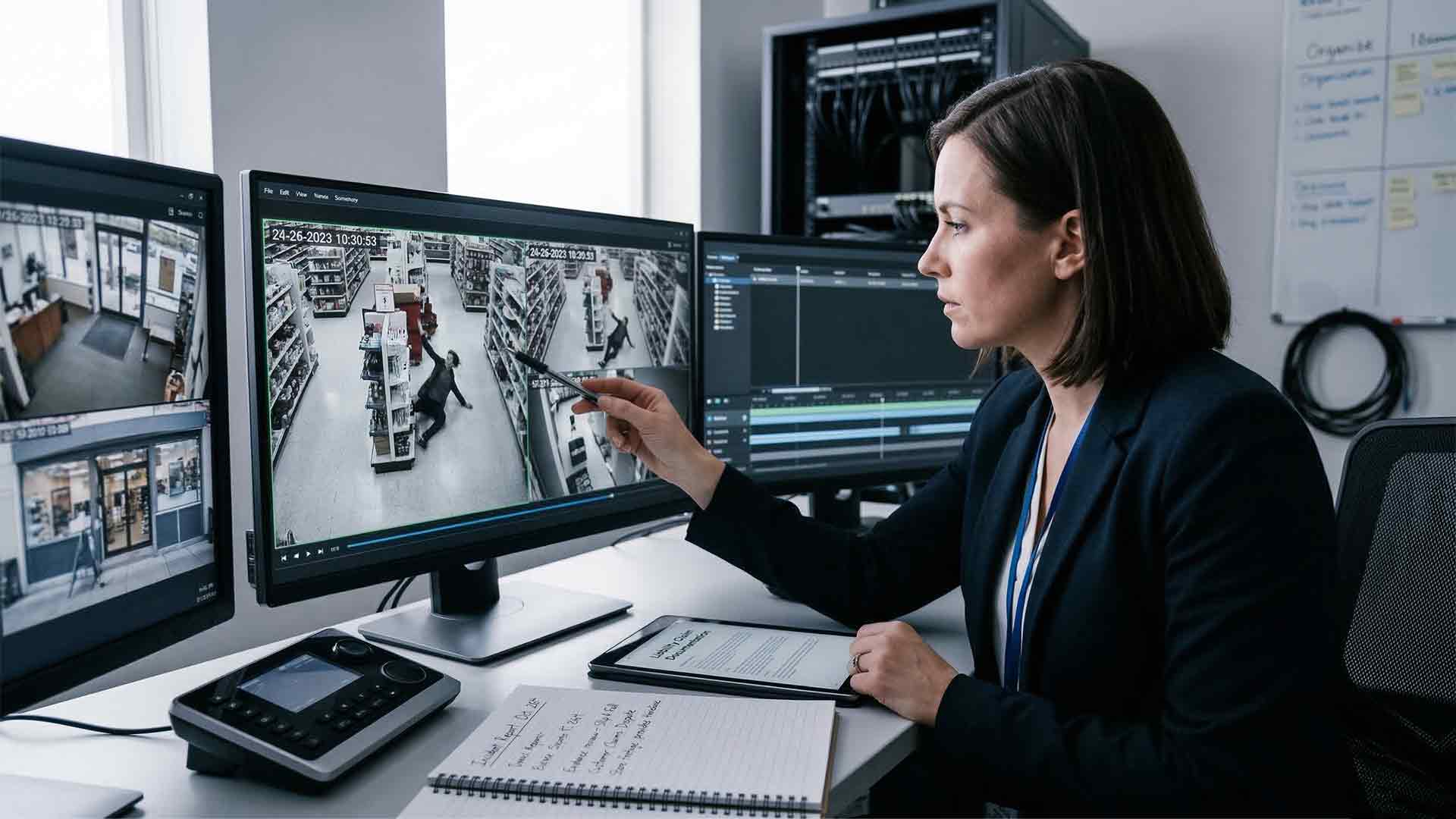
Businesses face a wide range of liability risks every day. A customer slips in your lobby. An employee reports a workplace injury. A delivery driver claims property damage occurred during unloading.
In many of these situations, the truth is not immediately clear.
Without evidence, liability disputes often rely on conflicting statements. Investigations take longer. Legal costs increase. Insurance claims become more complicated.
Business video surveillance helps reduce uncertainty by providing objective visual evidence of what actually occurred.
For many organizations, security cameras serve not only as a safety tool but also as a means of protecting against costly liability claims.
What Types of Liability Claims Businesses Commonly Face
Several types of incidents frequently lead to liability claims.
Common examples include:
• Customer Slip And Fall Accidents
• Workplace Injury Reports
• Property Damage Claims
• Theft Or Loss Allegations
• Employee Conduct Disputes
• Delivery Or Vendor Incidents
When these situations occur, businesses must determine exactly what happened.
Video surveillance provides an accurate record of events, which can be critical during insurance or legal investigations.

How Video Surveillance Provides Objective Evidence
One of the most valuable benefits of commercial surveillance evidence is objectivity.
Human memory can be unreliable, especially during stressful situations.
Witnesses may:
• Remember events differently
• Miss key details
• Provide incomplete information
Video recordings capture events as they happen.
Footage can confirm:
• The Sequence Of Events
• The Behavior Of Individuals Involved
• Environmental Conditions At The Time
• Whether Safety Procedures Were Followed
Clear documentation helps investigators understand what occurred.
How Security Cameras Help Prevent False Claims
Unfortunately, some liability claims are exaggerated or entirely false.
Without evidence, businesses may feel pressured to settle disputes simply to avoid legal expenses.
Security cameras for liability protection provide a powerful defense against fraudulent claims.
Video footage can reveal situations such as:
• Individuals Intentionally Falling
• Accidents Occurring Outside The Business Property
• Customers Ignoring Safety Warnings
• Incidents That Did Not Occur As Reported
When visual evidence contradicts a claim, businesses gain stronger legal positioning.
Supporting Insurance Investigations
Insurance providers rely on accurate documentation during claims investigations.
Video surveillance helps insurers evaluate incidents more quickly.
Footage may provide insight into:
• The Exact Time Of The Incident
• Environmental Hazards Present
• Whether Warning Signs Were Visible
• Actions Taken Immediately After The Event
This evidence can accelerate claims resolution and reduce disputes between insurers and policyholders.
Businesses that maintain video evidence often experience smoother insurance processes.
Documenting Workplace Safety Compliance
Workplace safety plays a major role in liability protection.
Video surveillance allows organizations to verify whether safety protocols were followed during an incident.
For example, footage may confirm:
• Proper Equipment Usage
• Employee Training Compliance
• Safe Operating Procedures
• Restricted Area Access Control
Video recordings provide an additional layer of verification.
Protecting Businesses From Property Damage Claims
Property damage claims may occur during:
• Vendor Deliveries
• Contractor Work
• Equipment Movement
• Parking Lot Incidents
Without visual records, determining responsibility can be difficult.
Security cameras positioned around loading docks, parking areas, and workspaces can clearly document events.
Footage may show:
• When Damage Occurred
• Who Was Present At The Time
• Whether Equipment Was Operated Properly
Clear documentation simplifies investigations.
Improving Incident Investigation Speed
Investigations without video evidence often require multiple interviews and a lengthy documentation review.
Video footage allows investigators to review events quickly.
Instead of relying solely on statements, investigators can analyze:
• Timeline Of Events
• Behavior Before And After Incidents
• Environmental Factors
Faster investigation reduces operational disruption and administrative workload.
Encouraging Safer Behavior
Visible surveillance cameras often encourage safer behavior.
Employees and visitors are more likely to follow safety procedures when they know the activity is recorded.
This can reduce incidents involving:
• Unsafe Equipment Use
• Restricted Area Violations
• Negligent Behavior
Security cameras function as both evidence tools and deterrents.
Reducing incidents is the most effective way to reduce liability claims.
Where Cameras Should Be Placed for Liability Protection
Proper camera placement improves the value of surveillance footage.
Key locations include:
• Building Entrances And Exits
• Parking Lots And Garages
• Reception Areas
• Hallways And Common Areas
• Loading Docks And Delivery Zones
• High Traffic Customer Areas
These locations capture activity where incidents are most likely to occur.
Camera placement should balance visibility with privacy considerations.
Legal Considerations for Surveillance Use
Businesses must ensure video surveillance complies with privacy regulations.
Avoid placing cameras in areas where individuals expect privacy, such as:
• Restrooms
• Locker Rooms
• Private Break Areas
Clear signage informing visitors of surveillance may also be required, depending on local regulations.
Organizations should consult legal counsel to confirm compliance requirements.
Responsible surveillance use protects both businesses and individuals.
How Long Surveillance Footage Should Be Stored
Retention policies affect the usefulness of video evidence.
Footage retention periods may depend on:
• Business risk exposure
• Industry regulations
• Insurance requirements
• Storage capacity
Many organizations store footage for several weeks or months.
Cloud storage and hybrid video systems make longer retention periods more manageable.
Proper retention ensures evidence remains available if claims arise later.
How Modern Surveillance Systems Improve Evidence Quality
Modern business video surveillance systems offer significant improvements over older equipment.
Features may include:
• High Resolution Recording
• Motion Detection Alerts
• Remote Video Access
• Cloud Storage Options
• Timestamped Event Logs
Higher-quality footage improves evidence reliability during investigations.
Clear recordings strengthen legal and insurance documentation.

How Managed Surveillance Services Support Liability Protection
Professional security providers often assist with surveillance system management.
Services may include:
• Camera System Monitoring
• Storage Management
• System Maintenance
• Footage Retrieval Assistance
• Layout Optimization
AIS supports businesses across Las Vegas and Southern California with commercial video surveillance solutions designed to improve safety and documentation capabilities.
Well-designed systems provide reliable coverage and accessible evidence when incidents occur.
What Effective Surveillance Protection Should Feel Like
When video surveillance is properly implemented:
• Incident Evidence Is Easily Accessible
• Claims Investigations Move Faster
• False Allegations Are Easier To Refute
• Employees Follow Safety Procedures
• Insurance Documentation Improves
Businesses gain confidence knowing they have reliable documentation if incidents occur.
Next Steps: Evaluate Your Surveillance Coverage
If your organization relies on outdated cameras or lacks coverage in critical areas, AIS offers a Business Security Camera Assessment. This evaluation reviews camera placement, storage policies, network security, and coverage zones to improve liability protection.
Strong surveillance systems help businesses document events accurately and reduce risk.
