
Southern California businesses face a critical decision when upgrading workplace security: invest in modern cloud-based systems like Verkada or stick with traditional CCTV infrastructure.
The choice affects not just your upfront budget but also long-term operational costs, security capabilities, and how easily your team can manage surveillance across multiple locations. This comparison breaks down real-world costs, features, and practical considerations specific to workplaces across Los Angeles, San Diego, Riverside, and Orange counties.
AIS provides security cameras and access control across Las Vegas and Southern California, helping businesses evaluate which security architecture fits their operational needs and budget constraints. After 24 years serving SMBs in legal, healthcare, manufacturing, education, and construction sectors, we've seen how the wrong security choice creates hidden costs and operational headaches
Understanding Verkada vs CCTV Architecture for Southern California Security Systems
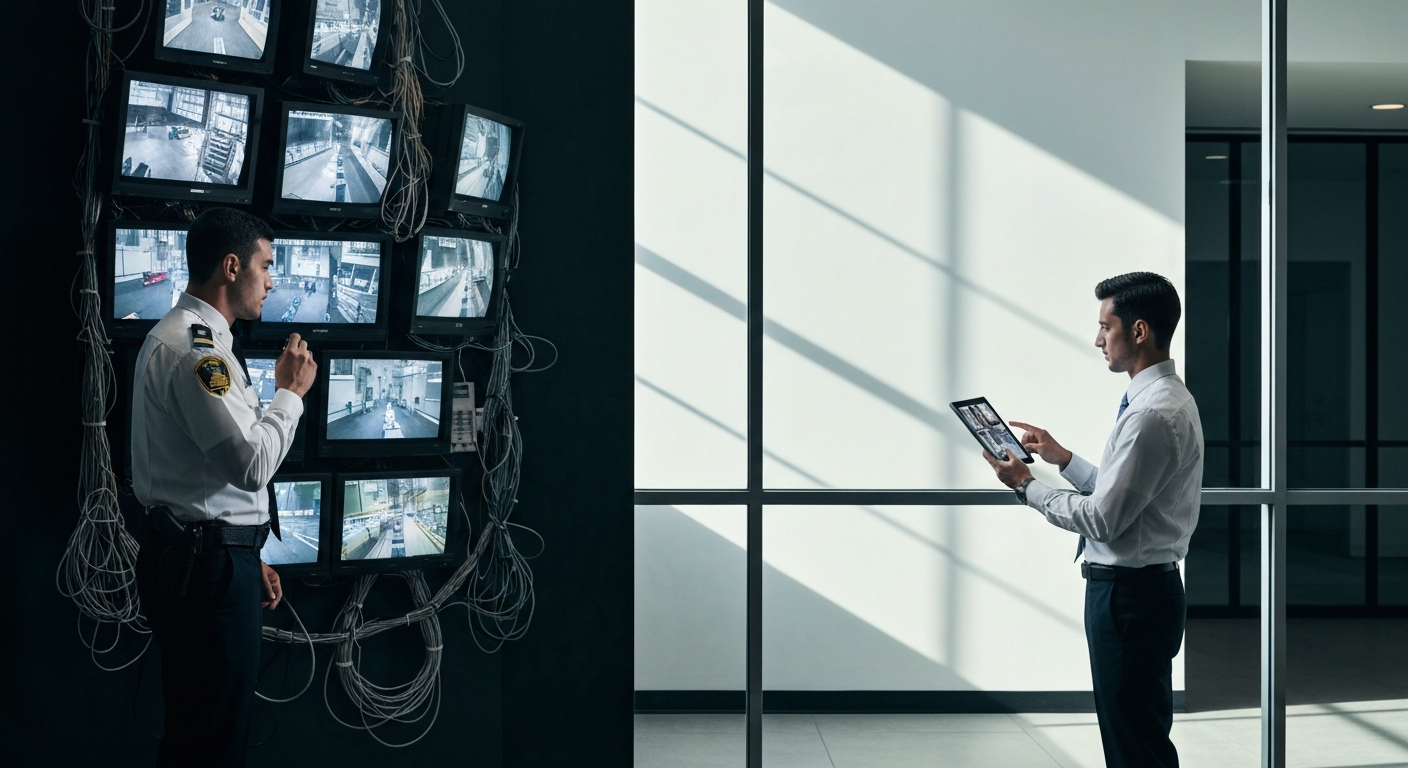
Traditional CCTV systems rely on dedicated video recorders, on-premise storage, and complex wiring infrastructure. These systems store footage locally on Network Video Recorders (NVRs) or Digital Video Recorders (DVRs), requiring physical hardware maintenance and regular tape or hard drive replacements. Your team typically accesses footage through a dedicated monitoring station or proprietary software installed on specific workstations.

Verkada operates on a fundamentally different architecture. The cameras themselves contain onboard storage, processing power, and direct cloud connectivity. Footage uploads automatically to secure cloud servers, accessible through any web browser with proper credentials.
Traditional CCTV Infrastructure Requirements
A typical traditional CCTV installation for a 10-camera Southern California office requires extensive cabling, a dedicated NVR closet with climate control, and backup power systems. You'll need Cat5/Cat6 cabling or coaxial runs to each camera location, potentially requiring conduit installation through walls and ceilings. The NVR system demands regular maintenance, software updates performed manually, and physical storage expansion as your footage retention needs grow.
Verkada's Cloud-Based Security Systems Model
Verkada cameras connect to your existing network infrastructure via Power over Ethernet (PoE). Each camera includes 30-365 days of onboard storage depending on model, with footage simultaneously backing up to AWS-based cloud servers. The system requires minimal on-premise hardware—just network switches with PoE capability and sufficient internet bandwidth.
Southern California Security Systems Cost Analysis: Verkada vs CCTV
Understanding the true cost comparison requires looking beyond equipment pricing to installation labor, ongoing maintenance, and total cost of ownership over five years. Southern California's labor rates, building codes, and workplace security requirements all impact your final investment.
Traditional CCTV systems typically show lower upfront equipment costs. A quality 10-camera system with NVR ranges from $2,500-$5,000 for equipment alone. However, professional installation in commercial spaces across Los Angeles, Riverside, or San Diego typically adds $3,000-$8,000 depending on building complexity and cable runs required.
CCTV Hidden Costs and Ongoing Expenses
Annual maintenance contracts for traditional systems run $800-$1,500 for Southern California businesses. You'll also need to budget for hard drive replacements every 2-3 years ($300-$600), software license renewals ($200-$500 annually), and potential NVR replacement every 5-7 years ($1,000-$2,500). According to Forbes, the Video Security as a Service (VSaaS) market is projected to grow to $24.7 billion by 2033, reflecting a fundamental shift in how businesses approach security infrastructure.
Verkada Access Control Review: Licensing and Total Cost
Verkada cameras start at approximately $600-$1,200 per camera depending on resolution and features. The critical difference lies in the licensing model: each camera requires an annual cloud license ranging from $200-$400 per camera. A 10-camera system requires $2,000-$4,000 annually in licensing fees.
Installation costs run significantly lower. Because Verkada cameras use existing network infrastructure, installation for a 10-camera system typically costs $1,500-$3,500 in Southern California. The system includes automatic firmware updates, cloud storage, unlimited user accounts, and mobile access without additional fees.
Daily Operations and Management: Verkada vs CCTV Practical Differences
The operational experience differs dramatically between traditional CCTV and Verkada systems for Southern California workplaces managing security across multiple locations or buildings. How your security team actually uses the system daily matters more than specification sheets suggest.
Traditional CCTV requires someone to physically access the NVR or use specific workstations with installed software. Searching footage across multiple cameras means navigating clunky interfaces, manually selecting date/time ranges, and often exporting clips to external drives. Multi-location businesses need VPN access configured for each site, creating security vulnerabilities and access complexity.
Verkada's Southern California Security Systems Interface
Verkada provides browser-based access from any device with internet connectivity. Your security manager in Pasadena can instantly review footage from your Rancho Cucamonga warehouse and San Diego office simultaneously. The interface includes AI-powered search capabilities—find "all people wearing red shirts" or "vehicles parked in loading zone" across all cameras and date ranges within seconds.
Sharing footage with law enforcement, insurance adjusters, or legal teams requires no technical expertise. Generate a secure share link with customizable expiration dates and view permissions. Your HR director can access specific incident footage without granting access to your entire security system.
Access Control Integration and User Management
Traditional CCTV systems require IT involvement for every user addition or permission change. Adding a new property manager means installing software, configuring VPN credentials, and providing training on the specific system interface. Removing access when employees leave requires manual deactivation across multiple systems.
Verkada user management works like any modern SaaS platform. Add users via email invitation, assign location-specific or camera-specific permissions, and integrate with your existing Single Sign-On (SSO) through Azure AD or Google Workspace. When employees leave, disabling their account immediately revokes all security system access.
Security, Compliance, and Reliability for Southern California Workplaces
Physical security vulnerabilities differ significantly between cloud-based and on-premise surveillance systems. Southern California businesses in regulated industries—healthcare practices, law firms, financial services—face specific compliance requirements affecting their security architecture choice.
Traditional CCTV concentrates all footage on physical hardware vulnerable to theft, fire, or natural disasters. Someone breaking into your office can destroy or steal the NVR, eliminating all surveillance evidence. Southern California's wildfire and earthquake risks make this vulnerability particularly concerning.
Verkada vs CCTV Data Security Considerations
Verkada cameras maintain onboard footage even during internet outages, uploading to cloud storage once connectivity restores. The distributed storage model means destroying one camera doesn't eliminate evidence from your other cameras. Verkada encrypts footage both in transit and at rest using AES 256-bit encryption, meeting HIPAA, FERPA, and SOC 2 Type II compliance standards.
Traditional CCTV security depends entirely on your network configuration and NVR security. Many systems ship with default passwords, unencrypted footage transmission, and no audit logging. Upgrading security requires technical expertise your team may lack.
Bandwidth and Internet Requirements
Verkada cameras typically consume 50-150 Kbps per camera during normal operation, with spikes to 1-2 Mbps during cloud uploads. A 10-camera system requires approximately 500-1500 Kbps (0.5-1.5 Mbps) of sustained upload bandwidth. Most Southern California business internet connections easily accommodate this load.
Traditional IP-based CCTV systems require similar network bandwidth for local streaming. The difference appears in internet dependency—CCTV systems function normally during internet outages for local viewing, while Verkada's remote access and cloud features become unavailable until connectivity restores.
Scalability and Future-Proofing Your Security Investment
Growing Southern California businesses need security systems that scale efficiently across new locations, additional cameras, and evolving workplace requirements. The architectural differences between Verkada and traditional CCTV create vastly different scaling experiences.
Adding cameras to traditional CCTV requires verifying NVR capacity, potentially upgrading storage, running new cables, and configuring camera settings individually. Opening a new office location means purchasing another complete NVR system, configuring separate remote access, and managing multiple disconnected security platforms.
Verkada Southern California Security Systems Expansion
Scaling Verkada requires simply deploying new cameras to your network and activating cloud licenses. All cameras across all locations appear in a single unified dashboard. Your 10-camera Irvine office and 25-camera Riverside warehouse operate on identical interfaces with unified user management.
According to Forbes, wireless security cameras offer easier installation and flexibility compared to traditional wired systems, making them a popular choice for modern security needs. While Verkada uses wired connections for reliability, the cloud architecture delivers similar flexibility benefits.
Integration With Access Control and Building Systems
Verkada offers native integration between video surveillance and access control (door locks, badge readers, visitor management). When someone badges into your building, the corresponding camera footage automatically tags that event for easy retrieval. Traditional CCTV requires custom integration work, often costing thousands per location.
Our managed IT services help Southern California businesses evaluate how security systems integrate with their broader technology stack. Security shouldn't exist in isolation from your network infrastructure, data backup strategies, and cybersecurity framework.
FAQs
How does the Verkada vs CCTV comparison affect Southern California security systems budgets?
Traditional CCTV shows lower upfront costs ($5,500-$13,000 for 10 cameras installed) but higher long-term expenses for maintenance and hardware replacement. Verkada requires higher initial investment ($8,000-$16,000 including first-year licensing) but predictable annual costs and lower maintenance expenses.
What are the main advantages of Verkada for access control review purposes?
Verkada provides instant footage access from anywhere via web browser, AI-powered search across all cameras and locations, automatic cloud backup, and seamless integration with access control systems. Sharing footage with authorized parties requires no technical expertise or physical media.
Do Southern California businesses need special internet connections for cloud security systems?
Most standard business internet connections support Verkada deployment, requiring approximately 50-150 Kbps upload bandwidth per camera during normal operation. A 10-camera system operates effectively on connections providing 1.5+ Mbps sustained upload speed.
How do traditional CCTV systems compare for multi-location Southern California workplaces?
Traditional CCTV requires separate NVR systems per location, individual VPN configurations for remote access, and distinct user management at each site. Verkada unifies all locations in a single interface with centralized user management and instant cross-location footage access.
What compliance requirements affect the Verkada vs CCTV decision?
Healthcare practices needing HIPAA compliance, schools requiring FERPA adherence, and businesses pursuing SOC 2 certification find Verkada's built-in encryption, audit logging, and access controls simplify compliance. Traditional CCTV requires significant custom configuration to meet these standards.

Making the Right Southern California Security Systems Choice for Your Business
The Verkada vs CCTV decision ultimately depends on your operational priorities, budget flexibility, and growth trajectory. Traditional CCTV serves businesses with limited locations, modest budgets, and internal technical expertise for ongoing maintenance. Verkada fits organizations prioritizing remote access, multi-location management, simplified operations, and predictable scaling costs.
Southern California businesses in regulated industries, multi-location operations, or rapid growth phases typically find Verkada's higher upfront investment delivers superior long-term value through reduced IT burden and operational flexibility. Companies with single locations, limited internet connectivity, or preference for one-time capital expenditures may prefer traditional CCTV's lower entry costs.
Ready to evaluate which security architecture fits your specific workplace requirements? Contact AIS today and we'll assess your locations, security needs, and budget to recommend the right solution—whether that's Verkada, traditional CCTV, or a hybrid approach tailored to your operations.
