
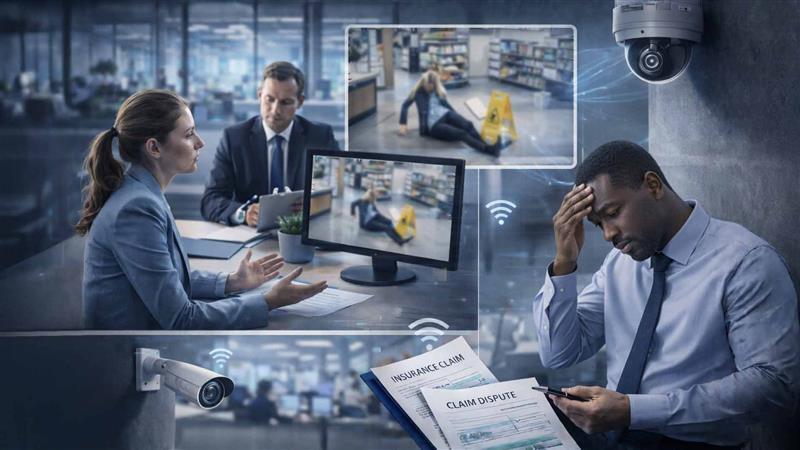
Liability claims are one of the fastest ways for unexpected costs to hit a business. A customer slips. An employee reports an injury. A delivery driver claims unsafe conditions. A theft accusation turns into a legal dispute. Without clear evidence, these situations become arguments — and arguments become expensive.
Insurance companies investigate. Attorneys get involved. Settlements become more likely. Even when your business did nothing wrong, the absence of proof increases your financial exposure in ways that can be genuinely damaging.
Video surveillance changes that equation.
Understanding how video surveillance helps with liability claims lets you see cameras as a risk management tool, not just a security measure. This article breaks down how footage protects your business, where it matters most, and what to consider when building out your surveillance strategy.
What Is a Liability Claim in a Business Setting?
A liability claim occurs when someone alleges that your business caused injury, loss, or damage. Common examples include:
- Slip and fall accidents
- Workplace injury claims
- Property damage disputes
- Customer altercations
- Theft accusations
- Security negligence claims
In most of these cases, facts become disputed quickly. One person remembers the scene one way. Another remembers it differently. Memory fades, witnesses leave, and physical evidence gets cleaned up before anyone documents it.
Video evidence cuts through all of that. It confirms or refutes claims objectively, based on what actually happened — not what anyone says happened.

How Video Surveillance Provides Objective Evidence
Clear Timeline of Events
One of the biggest challenges in any liability claim is reconstructing what happened and in what order. Video surveillance gives you:
- Exact timestamps showing when events occurred
- Visual confirmation of conditions at the time
- Behavior patterns before and after an incident
- Identification of the parties involved
This level of clarity eliminates speculation. It reduces reliance on memory or conflicting witness statements. It gives insurance adjusters, attorneys, and courts something concrete to work with — which typically works in your favor when your business followed proper procedures.
Verification of Safety Procedures
Many businesses maintain documented safety policies. Wet floor signs get placed. Security personnel patrol. Access is restricted after hours. Cleaning logs are kept.
But documentation only goes so far. Video footage confirms whether those procedures were actually followed at the moment an incident occurred. That verification strengthens your position during insurance reviews, settlement discussions, and legal proceedings.
How Surveillance Helps in Slip and Fall Claims
Slip and fall claims are among the most common — and most contested — liability issues businesses face. Without footage, you're left relying on witness accounts that often contradict each other.
With surveillance footage, you can determine:
- Whether a hazard actually existed
- How long the hazard had been present before the incident
- Whether warning signs were visible and properly placed
- Whether the injured party's own behavior contributed to the fall
In some cases, footage reveals that the hazard was created moments before the fall — by the claimant themselves or by a third party. In others, it confirms that your team had already placed signage and was actively responding to the situation.
This type of evidence can significantly reduce or eliminate claim payouts. It can also accelerate resolution, which means lower legal fees for your business.
How Cameras Protect Against Fraudulent Claims
Not every liability claim is legitimate. Staged accidents, exaggerated injuries, and false theft accusations exist in the real world — and they cost businesses real money.
Video surveillance helps identify:
- Staged accidents where the claimant created or exaggerated the conditions
- Exaggerated injury claims where footage shows the person moving normally moments after the alleged incident
- False theft accusations directed at employees or other customers
- Disputes over product handling or service delivery
Fraudulent claims drive up insurance premiums over time. They consume legal and management resources. They create reputational pressure. Footage often prevents these claims from escalating to the point where your business is forced to settle simply to make the situation go away.
Insurance carriers value documented evidence because it reduces uncertainty on their end, too. Businesses with strong surveillance systems often find that claims are resolved faster and with less friction.
How Surveillance Supports Workplace Injury Investigations
Employee injury claims require careful review. Workers' compensation determinations depend on whether the injury occurred during work duties and whether your safety policies were being followed at the time.
Video footage can show:
- Whether proper equipment was being used
- Whether safety procedures were followed or ignored
- Whether the injury occurred on-site or elsewhere
- Whether other contributing factors — environmental or behavioral — were present
This information helps employers and insurers reach accurate conclusions. It also protects employees who were genuinely injured under unsafe conditions, because their claims are supported by evidence too. Good surveillance doesn't just protect businesses from bad claims — it also ensures legitimate claims get handled fairly and efficiently.
The Role of Surveillance in Security Negligence Claims
Businesses sometimes face claims alleging that they failed to provide adequate security — and that this failure led to harm. Examples include:
- Assaults in parking lots or common areas
- Theft that occurred due to inadequate monitoring
- Unauthorized access to restricted spaces
If your business has no camera coverage, it becomes difficult to demonstrate that you took reasonable precautions. Video surveillance supports your defense by documenting:
- Patrol activity and security presence
- Monitoring of access points throughout the day
- Lighting conditions in areas where incidents occurred
- Response times when incidents were detected
Demonstrating that reasonable security measures were in place shifts the liability conversation significantly. Courts and insurers want to see that a business acted responsibly — and footage is the most direct way to show that.
What Modern Surveillance Systems Can Do in 2026
Surveillance technology has advanced considerably. Today's systems — like those from Verkada, which AIS deploys for businesses across Las Vegas and Southern California — go well beyond basic recording.
Modern cloud-managed systems offer:
- AI-powered motion detection that flags unusual activity automatically
- Facial recognition and people analytics for detailed incident review
- Remote access so owners and managers can review footage from anywhere
- Long-term cloud storage that keeps footage accessible when you need it for a claim
- Tamper-evident recording that holds up to legal scrutiny
Cloud storage is especially important for liability purposes. Local recording systems can fail, get damaged, or — in worst-case scenarios — be tampered with. Cloud-based systems maintain footage securely off-site, which means it's available when a claim surfaces weeks or even months after an incident.
It's also worth noting that the integrity of video evidence matters. As deepfake technology has become more sophisticated in 2026, courts and insurers are paying closer attention to chain of custody and authenticity. Working with enterprise-grade systems that include tamper-evident logs and metadata gives your footage more credibility in legal and insurance contexts.
Practical Placement: Where Cameras Matter Most for Liability
Having cameras isn't enough. Where you place them determines whether the footage you capture is actually useful when a claim arises.
High-priority locations for liability coverage include:
- Building entrances and exits — captures who came and went, and when
- Parking lots — one of the most common locations for slip and fall and assault claims
- Common areas and lobbies — high foot traffic means higher incident probability
- Loading docks and delivery areas — frequent site of injury and damage claims
- Stairwells and hallways — often overlooked, often relevant
- Point of sale areas — useful for theft and altercation disputes
A professional camera placement assessment can help you identify blind spots that could leave your business exposed. AIS works with businesses to evaluate their existing coverage and recommend layouts that maximize both security and liability protection.
What to Do After an Incident Occurs
Having the footage is only half the equation. Knowing what to do with it matters just as much.
When an incident occurs at your business:
1. Secure the footage immediately. Don't wait. Download or back up the relevant recording before it cycles out of storage.
2. Note the timestamp range. Document what time the incident occurred and pull footage starting at least 15–30 minutes before and after.
3. Limit access. Keep the footage restricted to management and legal counsel until you understand how it may be used.
4. Notify your insurance carrier promptly. Share that you have footage and work with them on proper handling.
5. Consult legal counsel before releasing footage to third parties or claimants.
Many businesses have strong footage but lose its value by mishandling it after an incident. Proper preservation and chain of custody matter when footage needs to hold up in a legal or insurance context.
FAQ: Video Surveillance and Liability Claims
Can video footage be used as evidence in court?
Yes. Video footage is regularly used as evidence in civil and criminal proceedings. The key factors are authenticity, chain of custody, and image quality. Enterprise-grade systems like Verkada include metadata and tamper-evident logs that support admissibility.

How long should businesses retain surveillance footage?
This depends on your industry, local regulations, and the nature of your business. A general best practice is 30–90 days of rolling storage, but businesses with higher liability exposure — retail, healthcare, construction — often retain footage for 6 months or longer. Cloud-based systems make extended retention easier and more affordable than it used to be.
Does having cameras reduce my business insurance premiums?
It can. Many insurers offer reduced premiums or favorable terms for businesses with documented surveillance systems. The reasoning is straightforward — footage reduces claim uncertainty, which reduces insurer risk. Talk to your insurance broker about whether your current system qualifies.
What if an employee tampers with or deletes footage?
This is a legitimate concern with local recording systems. Cloud-managed platforms reduce this risk significantly because footage is stored off-site and access is logged. Deletion attempts are typically flagged and recorded.
Do I need to notify customers or employees that they're being recorded?
Requirements vary by state. In California, for example, there are specific disclosure requirements for video recording in certain contexts. You should consult legal counsel and post visible signage where cameras are in use. AIS can help you understand best practices for your region.
Can surveillance footage be used against my business?
Yes — which is why proper safety procedures matter. Footage that shows a hazard was ignored, that policies weren't followed, or that an employee acted improperly can work against you. The goal isn't just to have cameras. It's to have cameras and follow your own procedures. When you do both, footage almost always supports your defense.
What's the difference between cloud-managed and local surveillance for liability purposes?
Local systems store footage on a physical device on your premises. They can be damaged, stolen, or fail at the wrong moment. Cloud-managed systems store footage securely off-site with redundancy built in. For liability purposes, cloud-based storage is generally more reliable because footage is accessible even if something happens to your physical equipment.
The Bottom Line
Liability claims aren't going away. And in 2026, the cost of being unprepared — financially and reputationally — is higher than ever.
Video surveillance doesn't prevent every incident. But it gives you objective evidence when incidents do occur. It protects legitimate businesses from fraudulent claims. It supports fair outcomes for employees and customers alike. And it shows insurers, courts, and the public that your business takes safety seriously.
The businesses that benefit most aren't the ones that installed cameras and forgot about them. They're the ones that chose the right systems, placed cameras strategically, followed their own safety procedures, and knew what to do when something happened.
If you're not sure whether your current setup would hold up when you need it most, that's worth finding out now — before a claim forces the question.
Ready to evaluate your surveillance coverage?
Schedule a Free Consultation with the AIS team. We'll assess your current setup, identify gaps, and recommend a system that protects your business long-term.
Or Contact AIS Today to speak with a local expert in Las Vegas or Southern California.
Topics:
