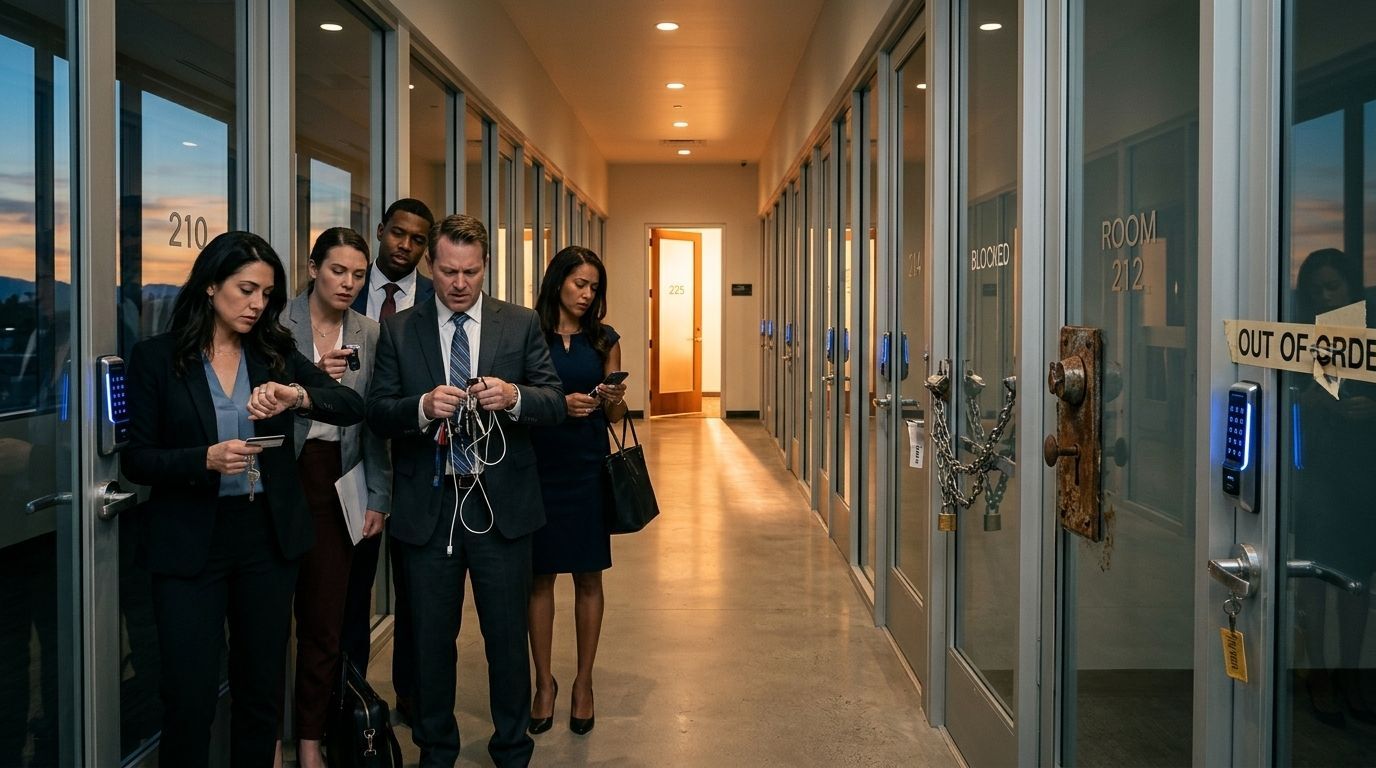
The most common access control problems in Nevada workplaces include lost or untracked physical keys, failure to revoke credentials for inactive users, and inadequate visitor access monitoring in sensitive areas. State audits have documented these failures across multiple agencies, and similar patterns appear in private-sector environments. These vulnerabilities directly expose organizations to unauthorized access, data breaches, and compliance violations.
AIS provides security cameras and access control solutions across Las Vegas and Southern California designed to close exactly these gaps. Businesses that audit their current systems regularly are far better positioned to prevent the failures described in state-level performance reviews.
What access control problems in Nevada workplaces do state audits most commonly find?
Nevada state audits consistently identify three physical security failures: untracked physical keys, stale user credentials that are never deactivated, and visitor access to restricted areas without proper logging. A 2024 Nevada Legislative Auditor report found that 2 of 28 physical keys were lost or stolen at the Silver State Health Insurance Exchange, and keycard account records were not reviewed regularly — leaving inactive users with active access.
How do lost physical keys create access control problems in Nevada organizations?
Physical key loss is a documented and underreported security system problem in Nevada workplaces. When keys go missing, there is no audit trail showing who had access or when — unlike electronic keycards. The Nevada Legislative Auditor's 2024 performance audit of the Silver State Health Insurance Exchange confirmed that 2 of 28 physical keys could not be accounted for, a rate of over 7%.
Why do inactive credentials remain one of the most persistent workplace security issues?
Credential lifecycle management — the process of issuing, reviewing, and revoking access rights — is frequently neglected in Nevada agencies and businesses alike. The same 2024 Nevada audit found that keycard account records were not regularly reviewed, allowing users with outdated or incorrect credentials to retain access to secure areas. Without a formal review schedule, terminated employees or transferred staff may retain access indefinitely.
Why is visitor access monitoring a critical workplace security issue in Nevada?
Unmonitored visitor access to sensitive areas is a leading physical security failure in Nevada workplaces. Without mandatory visitor logs, organizations cannot verify who entered restricted zones, when they entered, or whether they were escorted. Nevada state IT security standards require entry logs to be maintained for at least one year, yet audits show this standard is frequently unmet.
What do Nevada audits reveal about visitor access security system problems?
A 2024 Nevada Legislative Auditor performance audit of the Colorado River Commission found that visitor access to sensitive areas — including SCADA control rooms and main server rooms — was not properly monitored. Missing visitor logs violated state IT security standards that mandate entry records be kept for a minimum of one year. This gap means there is no verifiable record of who accessed critical infrastructure.
Which sensitive areas face the greatest workplace security issues from poor visitor controls?
Server rooms, SCADA control environments, and data centers represent the highest-risk zones when visitor logging fails. A breach or sabotage in these spaces can have cascading operational consequences far beyond the physical location. Organizations operating utility infrastructure, healthcare systems, or financial networks are especially vulnerable when visitor access goes unlogged.

How do outdated security systems contribute to access control problems in Nevada?
Outdated access control systems — those relying solely on physical keys, legacy keypads, or manual sign-in sheets — cannot generate the audit logs, real-time alerts, or remote management capabilities modern workplaces require. These legacy setups make it structurally impossible to enforce the credential review and visitor monitoring standards Nevada agencies are already required to meet. Upgrading to modern electronic access control directly addresses the most common audit findings.
What security system problems stem from using physical keys instead of electronic access?
Physical keys provide no timestamped entry data, cannot be remotely deactivated, and create liability the moment they go missing. Electronic keycard or mobile credential systems generate automatic logs that satisfy state retention requirements and simplify credential audits. According to NIST (https://www.nist.gov), physical access control systems should include automated audit logging as a baseline security control.
How do modern access control systems resolve common workplace security issues in Nevada?
Cloud-managed access control platforms allow administrators to deactivate credentials instantly, review access logs remotely, and generate compliance reports on demand. These capabilities directly address the two most cited Nevada audit findings: stale credentials and missing entry logs. AIS deploys these systems for Nevada businesses through its security cameras and access control services.
What should Nevada businesses do to fix access control problems before an audit?
Nevada businesses should conduct a credential audit quarterly, replace physical keys with electronic access where feasible, and implement mandatory visitor logging in all restricted areas. These three steps address the core findings from state performance audits and align with established physical security frameworks. Organizations that act proactively avoid both regulatory findings and the operational disruptions that follow unauthorized access events.
How often should businesses review credentials to prevent workplace security issues?
Credential reviews should occur at minimum quarterly, with immediate deactivation triggered by employee termination or role change. The Nevada Legislative Auditor findings show that irregular review cycles are the direct cause of inactive users retaining access to secure areas. Automating this review through an integrated access control platform eliminates human error from the process.
What visitor logging practices prevent security system problems in Nevada workplaces?
Visitor logs must capture name, host, time in, time out, and areas accessed — and must be retained for at least one year per Nevada state IT security standards. Digital visitor management systems automate this process and produce searchable, tamper-resistant records. Pairing visitor logs with video surveillance creates a corroborating record that supports both internal reviews and external audits.
Which industries in Nevada face the most serious access control problems in workplaces?
Nevada industries with the highest access control risk include utilities and energy, healthcare, government agencies, hospitality, and financial services. These sectors manage sensitive data, critical infrastructure, or high-value physical assets where unauthorized entry carries severe consequences. State audit findings from utility operators and health insurance exchanges confirm that even regulated entities frequently fall short of minimum access control standards.
Why do Nevada utility and government workplaces have elevated security system problems?
Utilities operating SCADA systems and government agencies managing sensitive constituent data face the highest regulatory exposure from access control failures. The Colorado River Commission audit confirmed that server rooms and SCADA control environments were accessed without proper logging — a finding that would be catastrophic in an active cyberattack or insider threat scenario. According to Gartner (https://www.gartner.com), physical access control failures are a leading enabler of insider threats in critical infrastructure environments.
How do hospitality and healthcare workplaces face distinct access control problems in Nevada?
Nevada's hospitality sector manages high employee turnover, which dramatically increases the risk of unreturned keycards and uncanceled credentials. Healthcare organizations face HIPAA-related obligations that require strict physical access controls over areas containing patient data or pharmaceuticals. Both industries benefit significantly from automated credential deactivation tied directly to HR system offboarding workflows.
FAQs
What are the most common access control problems in Nevada workplaces?
The most common access control problems in Nevada workplaces are lost or untracked physical keys, failure to deactivate credentials for inactive users, and unmonitored visitor access to restricted areas. These findings are documented in multiple 2024 Nevada Legislative Auditor performance reports.
What workplace security issues do Nevada state audits most frequently cite?
Nevada state audits most frequently cite missing visitor logs, stale keycard credentials, and unaccounted-for physical keys as the top workplace security issues. The 2024 audits of both the Silver State Health Insurance Exchange and the Colorado River Commission identified all three failure types.

How long must Nevada organizations retain visitor access logs under state IT security standards?
Nevada state IT security standards require visitor entry logs for sensitive areas to be retained for a minimum of one year. The Colorado River Commission audit found that this standard was not being met, leaving access to SCADA rooms and server facilities unverifiable.
What is the fastest fix for access control problems in Nevada businesses?
The fastest fix for access control problems is replacing physical keys with electronic keycard or mobile credential systems and setting up automated credential deactivation tied to HR offboarding. These two changes directly address the most common audit findings and can typically be implemented within weeks.
How can AIS help Nevada businesses address security system problems?
AIS provides security system assessments, installation, and managed access control services for businesses across Las Vegas and Southern California. AIS can audit existing credential lists, replace legacy key systems, and configure visitor management workflows that meet Nevada state security standards.
The Bottom Line on Access Control Problems in Nevada Workplaces
Nevada workplaces — from state agencies to private businesses — face a consistent set of access control failures: lost keys, uncanceled credentials, and unlogged visitor access. State audits in 2024 documented these problems at two separate agencies, confirming they are systemic rather than isolated. Addressing them requires electronic access control, automated credential reviews, and compliant visitor logging practices.
If your organization is overdue for an access control assessment, talk to an AIS technology advisor — we help Nevada and Southern California businesses identify security gaps and implement systems that hold up to audit scrutiny.
Topics:
