
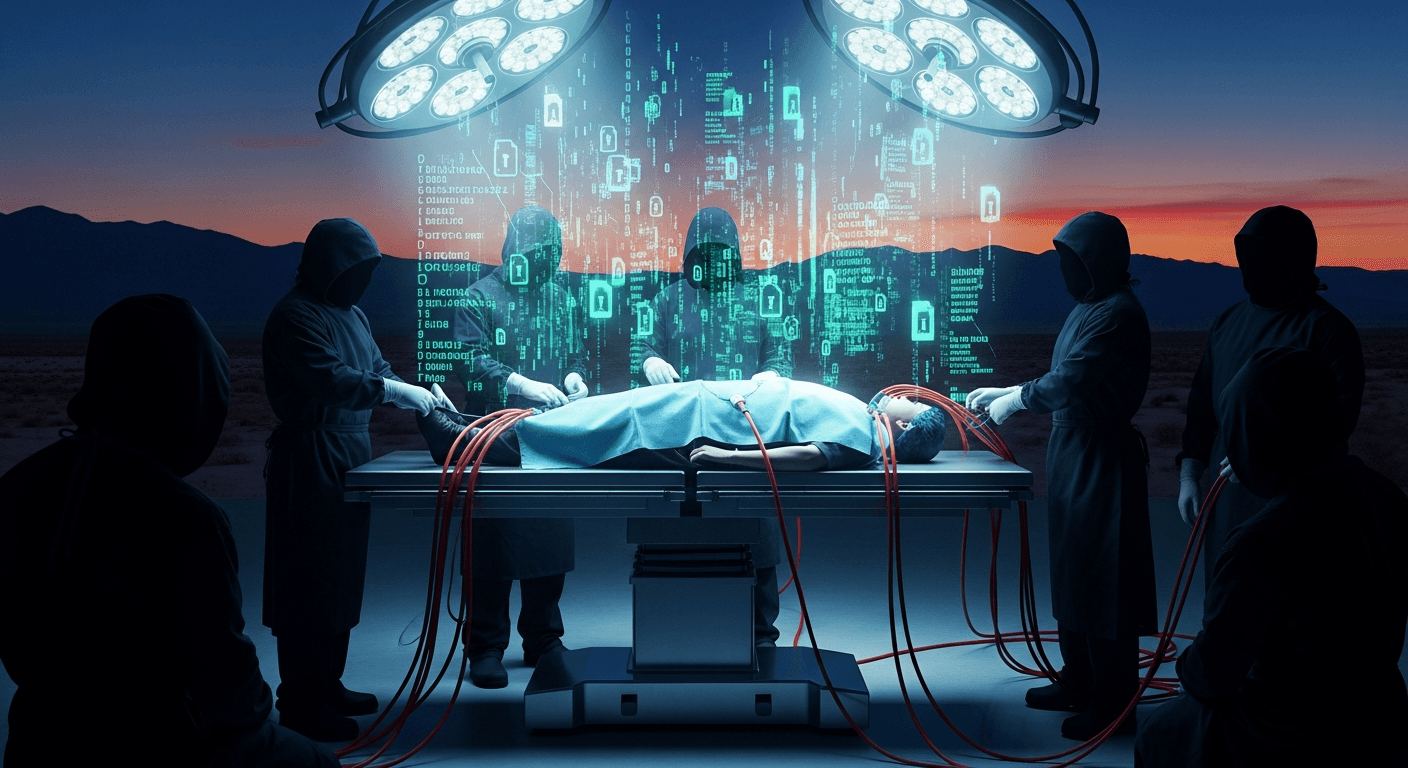
Healthcare organizations in Nevada face a growing range of cyber threats that directly affect patient data, clinical operations, and regulatory standing. In 2024, U.S. healthcare organizations reported 275 million records breached, more than doubling the prior year's figures. Ransomware attacks against healthcare entities increased by 32% during the same period, with extortion demands reaching up to $4 million.
Nevada providers, from small family practices in Henderson to large hospital systems in Las Vegas, share the same fundamental vulnerabilities seen across the national healthcare sector. This article identifies the most common cybersecurity problems Nevada healthcare providers encounter, explains why each threat exists, and outlines practical measures that address them.
What Are the Most Common Cybersecurity Threats Facing Nevada Healthcare Organizations?
The most common cybersecurity threats facing Nevada healthcare organizations are ransomware attacks, phishing and social engineering, unsecured medical devices, insider threats, and third-party vendor vulnerabilities. Each of these threat types exploits specific weaknesses found in healthcare environments, including legacy systems, high staff turnover, and a large network of connected devices.
Healthcare is among the most targeted industries for cybercrime because electronic health records (EHRs) carry more monetizable information than almost any other data type. A single patient record can contain Social Security numbers, insurance details, billing histories, and prescription data.
Nevada's healthcare sector reflects national patterns. A 2023 breach at HCA Healthcare, which operates facilities across Nevada, exposed data belonging to approximately 11 million patients. That incident demonstrated how a single vulnerability in a large health system can have wide-scale consequences for local patients.

Why Is Ransomware Such a Significant Problem for Healthcare Providers?
Ransomware is particularly damaging to healthcare providers because it encrypts critical systems, including EHR platforms and diagnostic tools, making patient care impossible until systems are restored. Hospitals and clinics face pressure to pay ransoms quickly because downtime can translate directly into delayed treatments, canceled procedures, and compromised patient safety.
Ransomware operators increasingly target healthcare for several reasons:
- High urgency: Clinical environments cannot tolerate prolonged downtime, which increases the likelihood of ransom payment.
- Valuable data: Health records command higher prices on dark web markets than financial records alone.
- Legacy infrastructure: Many healthcare organizations run older operating systems that no longer receive security patches.
- Limited IT resources: Smaller practices often lack dedicated cybersecurity staff.
A ransomware attack on a major U.S. medical center in early 2026 forced the shutdown of its EHR platform, causing temporary clinic closures and canceled elective procedures. Nevada providers operate under the same conditions that make these attacks possible.
Effective ransomware defense requires immutable backups stored separately from primary systems, endpoint detection and response (EDR) tools, and documented recovery procedures that clinical teams have practiced.
How Does Phishing Affect Nevada Healthcare Practices?
Phishing is the leading initial access method in healthcare cyberattacks. Staff members receive emails or messages designed to appear legitimate, then click links or attachments that install malware or harvest credentials. Healthcare workers are targeted frequently because they handle sensitive data and often work under time pressure.
Common phishing scenarios in healthcare include:
- Fake patient intake forms sent via email
- Spoofed messages appearing to come from insurance companies or the Nevada Department of Health and Human Services
- Credential harvesting pages mimicking EHR login portals
- SMS-based attacks (smishing) targeting mobile devices used for clinical communication
Social engineering extends beyond phishing to include phone-based attacks (vishing), where callers impersonate vendors or IT staff to extract login credentials or remote access permissions.
Reducing phishing risk requires security awareness training conducted at regular intervals, simulated phishing tests to measure staff behavior, and email filtering that flags or blocks suspicious messages before they reach inboxes.
What Legal and Regulatory Requirements Apply to Healthcare Cybersecurity in Nevada?
Healthcare providers in Nevada must comply with the federal Health Insurance Portability and Accountability Act (HIPAA) Security Rule, which mandates administrative, physical, and technical safeguards for electronic protected health information (ePHI). Nevada also has its own data breach notification law under Nevada Revised Statutes Chapter 603A, which requires notification to affected individuals when personal information is compromised.
Key federal requirements under HIPAA include:
- Risk analysis: Covered entities must conduct and document a formal assessment of risks to ePHI.
- Access controls: Only authorized personnel should access patient data, with activity logs maintained.
- Encryption: ePHI transmitted over open networks must be encrypted.
- Breach notification: Affected individuals must be notified within 60 days of discovering a breach; the U.S. Department of Health and Human Services must also be notified.
Nevada Revised Statutes 603A goes beyond federal baseline requirements in some areas. Nevada defines personal information broadly and requires reasonable security measures for all businesses that collect or maintain data on Nevada residents. Healthcare providers must ensure their security posture satisfies both sets of requirements simultaneously.
The Office for Civil Rights (OCR), which enforces HIPAA, increased enforcement activity significantly in recent years. Fines for HIPAA violations range from $100 to $50,000 per violation, with annual caps that vary by violation tier.
What Security Risks Come From Medical Devices and Connected Equipment?
Connected medical devices, including imaging equipment, infusion pumps, patient monitors, and telehealth platforms, frequently run firmware that cannot be updated with standard security patches. These devices often have default credentials that are never changed, creating persistent access points for attackers who gain entry to a healthcare network.
This category of risk is sometimes called IoMT (Internet of Medical Things) security. The problem is structural: medical devices are approved by the FDA for specific software configurations, and manufacturers may not release security updates promptly or at all.
Common IoMT vulnerabilities include:
- Default usernames and passwords that are publicly documented
- Unencrypted data transmission between devices and central systems
- No network segmentation, meaning a compromised device can reach EHR servers
- Outdated operating systems that no longer receive vendor support
Network segmentation is among the most effective controls for IoMT risk. Placing medical devices on an isolated network segment limits the damage an attacker can cause if one device is compromised.
How Do Third-Party Vendors Create Cybersecurity Risks for Healthcare Organizations?
Third-party vendors, including billing companies, EHR providers, telehealth platforms, and IT support firms, often require access to healthcare networks and patient data. A security failure at any vendor can expose the healthcare provider's data without any direct attack on the provider itself.
HIPAA requires healthcare organizations to execute Business Associate Agreements (BAAs) with any vendor that handles ePHI. A BAA establishes the vendor's responsibility to protect that data, but it does not guarantee the vendor's security practices are adequate.
The 2024 Change Healthcare cyberattack disrupted billing and claims processing for thousands of healthcare providers across the United States. The incident demonstrated how a single vendor serving a large portion of the industry can cause cascading operational failures when its systems are compromised.

Risk management steps for vendor relationships include:
- Reviewing vendor security certifications such as SOC 2 Type II before contracting
- Requiring vendors to carry cyber liability insurance
- Limiting vendor access to only the data and systems they need (least privilege)
- Regularly auditing vendor access logs
What Is the Risk of Insider Threats in Healthcare Settings?
Insider threats occur when current or former employees, contractors, or business associates access or misuse patient data without authorization. Healthcare has one of the highest insider threat rates of any industry due to high staff turnover, widespread access to patient records, and limited monitoring of internal activity.
Insider threats fall into two categories:
- Malicious insiders: Employees who deliberately steal or sell patient data for financial gain
- Negligent insiders: Staff who accidentally expose data through poor practices, such as emailing records to personal accounts or losing unencrypted devices
According to industry research, a significant portion of healthcare data breaches involve insiders rather than external attackers. Role-based access controls, activity monitoring, and clear policies on data handling reduce both categories of risk.
Staff separation procedures are also important. When an employee leaves an organization, their credentials and system access should be revoked immediately. Delayed deprovisioning is a documented source of insider incidents.
How Can Managed IT Services Help Healthcare Providers Reduce Cybersecurity Risk?
Managed IT services provide healthcare organizations with continuous monitoring, threat detection, patch management, and incident response capabilities without requiring the provider to staff a full internal security team. For smaller Nevada practices that lack dedicated IT personnel, a managed service provider (MSP) with healthcare experience can implement and maintain security controls that meet HIPAA standards.
Specific services an MSP can deliver to healthcare organizations include:
- 24/7 network monitoring to detect unusual activity in real time
- Patch management that keeps operating systems and software current across all endpoints
- Endpoint detection and response (EDR) to identify and contain malware before it spreads
- Email security filtering to block phishing messages and malicious attachments
- Backup management using immutable, offsite backups that ransomware cannot encrypt
- HIPAA risk assessments to document compliance with the Security Rule
- Multi-factor authentication (MFA) deployment on remote access, EHR portals, and administrative accounts
- Incident response planning with documented procedures and tabletop exercises that include clinical staff
AIS provides managed IT services to healthcare practices across Las Vegas and Southern California. Healthcare organizations seeking to understand what a managed IT engagement involves can review what to expect from managed IT services and how managed IT services are typically structured for small and mid-sized businesses.
For organizations evaluating whether their current IT posture is adequate, a formal risk assessment is the recommended starting point. The assessment documents existing vulnerabilities against HIPAA requirements and produces a prioritized remediation plan.
What Steps Should Nevada Healthcare Providers Take Right Now?
Nevada healthcare providers should take five immediate steps: conduct a formal HIPAA risk analysis, enable multi-factor authentication on all remote access and EHR logins, verify that all vendor relationships are covered by current Business Associate Agreements, implement immutable offsite backups, and schedule security awareness training for clinical and administrative staff.
These measures address the highest-probability threats: ransomware, phishing, and third-party vendor compromise.
A prioritized action list:
- Immediate: Enable MFA on all systems with remote access or patient data access
- Within 30 days: Audit vendor BAAs and confirm all third-party access is documented
- Within 60 days: Conduct or commission a HIPAA Security Rule risk analysis
- Ongoing: Schedule quarterly phishing simulations and annual security training for all staff
- Ongoing: Test backup restoration procedures to confirm data can be recovered without paying a ransom
Nevada providers can also reference the HHS Office for Civil Rights guidance on HIPAA Security Rule compliance and the Cybersecurity and Infrastructure Security Agency (CISA) healthcare cybersecurity resources for additional technical standards.
Healthcare practices evaluating managed IT options can learn more about how AIS supports healthcare organizations through its managed IT services in Las Vegas and Southern California.
